Filtered — This model refuses requests beyond its own limits outright. Measured, not assumed — models we have not measured carry no label at all.

Kling 3.0 Review: Motion Control and Multi-Shot, Filtered at L2

Kling 3.0 is Kling's flagship line — image, text and Motion Control — filtered above lingerie level everywhere, from $0.0672 a second at 720p.

Spicy Index

45.9/ 100

Freedom Score

16.0/ 100

Range if the rest pass: 16.0–50.0

  • Mild · The lightest prompts in the test

  • Moderate · Where filtered models start to refuse

  • Strong · Mid-scale; must be tested before a model is ranked

  • Very strong · Where most models start to hold back

  • Maximum · The top of the scale, scored in two halves: class A and class B

Price
$0.336 per 5-second clip
Median time
2.2 min
Success rate
Collecting data

Kling 3.0 is the numbered flagship in Kling's line, sold here as three tasks: image-to-video, text-to-video, and character-animation — Kling's Motion Control, which drives a character photo from a 3-to-30-second performance clip. We ran our full content ladder against all three endpoints on 28 September 2026. L1 Suggestive rendered on every task; L2 Partial and everything past it was refused every time, on every task, including six further L2 probes the same day across six Kling 3.0 and O3 endpoints — this is Kling reviewing the prompt, any upload and the finished clip itself, not something a different endpoint changes. Image-to-video and text-to-video price the same: $0.0672 a second at 720p without sound (20% under Kling's own list price of $0.084), rising to $0.336 a second at 4K whether or not you turn sound on. Motion Control runs $0.1008 a second at 720p, billed on the length of the driving clip you upload, not the length of the result.

The verdict

Key facts

  • Pass rate: L1 Suggestive rendered on all three Kling 3.0 tasks in our tests; L2 Partial was refused on all three, every time — 19 model variants across the Kling line plus six further L2 probes the same day on six different Kling 3.0 and O3 endpoints, 6 of 6 refused. L5 Extreme gore rendered on text-to-video but was refused on image-to-video.
  • Price: $0.0672 a second at 720p without sound on image and text-to-video; $0.1008 a second at 720p on Motion Control; 4K is $0.336 a second on image and text-to-video with or without sound.
  • Limits: Motion Control's driving clip needs to run 3 to 30 seconds and be roughly 700 pixels wide or wider; the result matches the driving clip's length exactly. Motion Control carries no audio track at all.
  • Sources: every scored run is in the Kling 3.0 test report, the scoring rules are on our review methodology page, and the full parameter list is on the Kling 3.0 model page.

What we liked and what held it back

What we liked

  • Motion Control matches a driving performance beat for beat. In our own test, a studio dance routine — side steps, a deep squat, both arms raised — came back on a new character who kept her own face, outfit and background from the character photo, timed to the source clip.
  • Image-to-video holds a scene together across a full turn toward camera. A yacht-deck prompt asking for one continuous shot kept the same golden-pink dusk light and framing through a turn, a hair-push and a spoken line.
  • Spoken dialogue comes back word for word when it's timed to a visible speaker. A rooftop-party prompt with sound on returned a whole group's shouted toast in sync with clinking glasses and the beat of the music.
  • 4K costs the same per second whether or not you turn sound on, on both image and text-to-video.
  • Closing frames are supported on image-to-video, so the shot's ending pose can be set directly rather than left to the prompt alone.

What held it back

  • L2 Partial and everything past it is refused on all three tasks, every one of the ladder runs we sent, plus six further L2 probes across Kling endpoints the same day.
  • Kling 3.0 sometimes cuts on its own even with a single-shot request. Three of our example clips came back with an extra cut we hadn't asked for; writing "one continuous shot, no cuts" into the prompt is what kept a take to one shot in our tests.
  • Motion Control carries no audio at all, on either resolution tier — there's no way to add a soundtrack to a driven performance.
  • L5 Extreme gore behaves differently by task. It rendered on text-to-video and was refused on image-to-video in our tests, so the same brief can land differently depending on which endpoint sends it.
  • A background detail can drift between angles inside the same clip. In a lightning-and-rain prompt we ran, a truck's position relative to the building didn't match between the opening frame and a later angle in the same shot.

What the clips show

We don't publish our content-ladder runs; what follows is the everyday register, taken from the published, safe-for-work examples on the Kling 3.0 model page.

A studio dance, recast. A driving clip of side steps, a deep squat with arms spread and both arms raised came back matched beat for beat on a new character, who kept her own face, satin suit and studio background instead of the driving clip's performer.

A turn toward camera at dusk. From a yacht-deck opening frame, "one continuous shot with no cuts" plus a light description kept the dusk color and framing steady through a full turn toward camera and a spoken line.

Lightning over a forecourt. A rain-and-lightning prompt added only the flash, a step off a truck and a walk into the downpour — the wardrobe and lighting held, but a truck's position relative to the building didn't match between the opening frame and a later angle in the same clip.

A rooftop toast. A handheld shot wove through a dancing crowd and ended with the whole group shouting one line together, timed against music and clinking bottles — naming a single shared line in the prompt kept the dialogue from overlapping.

Prompts that worked

On image-to-video, say explicitly whether you want a single continuous shot or a cut sequence — the model will add a cut on its own if you leave it ambiguous. On Motion Control, the driving clip sets the timing and the performance; the character photo sets who's performing it.

1. Locking a single shot on image-to-video.

text
One continuous shot with no cuts, the golden-pink dusk light staying the same throughout. He turns from the rail toward the camera, pushes his wet hair back with one hand and smiles, then says, "Jump in, the water's perfect."

Run this prompt on Kling 3.0 →

2. A single shared line for a group scene.

text
A summer rooftop party in Brooklyn at blue hour, string lights and the Manhattan skyline behind. A group of friends dance and laugh, then everyone shouts one line together: "To us!" Their glasses clink on the beat.

Run this prompt on Kling 3.0 →

Weak: leaving the shot count to the model, even with shot_type: single, is where we saw unasked-for cuts creep in. Strong: spell out "one continuous shot with no cuts" the way prompt 1 does when you need the take to stay in one piece; save shot_type: multi and a numbered shot list for when you want the cuts yourself.

How far it goes

Kling reviews every request itself, at three points: the prompt text, any uploaded image or driving clip, and the finished clip. That held across all three Kling 3.0 tasks — the same outcomes came back on every route we tested, so this is Kling's own moderation rather than something a different endpoint would change.

On 28 September 2026 we ran our five-rung ladder against image-to-video and text-to-video (Motion Control wasn't part of this round). L1 Suggestive (lingerie, a slipping strap) rendered on every task tested; L2 Partial was refused every time we sent it, including six further L2 probes across six Kling 3.0 and O3 endpoints the same day. L3 Strong and L4 Intense (an intimate scene between two adults) were refused too, mostly at the prompt or upload stage within seconds to about half a minute; on one route the L3 text-to-video request came back refused only after about two minutes. The L5 Extreme restraint-and-impact probe was refused after rendering. The L5 Extreme gore probe split by task: it rendered on text-to-video and was refused on image-to-video.

Refused requests cost nothing — every refusal in our test set, including ones that only came back refused after the clip had fully rendered, was free. There's no quiet softening either: in every run the clip either came back as written or the job failed outright, with clothing never added back and the scene never swapped for a safer one.

The page label reflects this: image-to-video and text-to-video both carry a filtered policy tier, and we add no content filter of our own on top of it.

Not tested yet: Motion Control against our content ladder; whether a longer, more specific prompt moves the L4 Intense refusal point; scenes with more than two people at the harder rungs.

Adults only, in every prompt, upload and output. Never depict a real, identifiable person without their consent, and make sure you hold the rights to any photo or clip you upload. For content past lingerie level, use one of our Spicy families instead — Wan 2.2 Spicy and Seedance 2.5 Spicy are two of the video ones — this endpoint refuses that far past L1.

What the community says

Kling 3.0 comes up by name when developers compare closed-source video tools. In an April 2026 Hacker News thread, one commenter wrote: "The models most professionals use are Kling o3, Kling 3.0 and, more recently, Seedance 2.0". A separate May 2026 thread, summarizing AI-video subreddit opinion, grouped Kling 3 with Seedance 2.0 among the closed-source video models that community reached for.

Public blind-vote boards place it a little higher than O3 on the same tests. On Artificial Analysis's image-to-video leaderboard (28 September 2026), Kling 3.0's 720p Standard tier placed 23rd of 82 tracked models; on arena.ai's image-to-video board (21 September 2026), its 1080p Pro tier placed 19th of 48 on more than 200,000 votes.

Alternatives

  • Need reference photos cast into a shot, or an existing clip edited? Kling O3 swaps Motion Control for reference-to-video and video-edit, at the same core prices as 3.0's image and text tasks. Our Kling O3 review.
  • Don't need Motion Control at all? Kling 2.6 covers image and text-to-video with native audio from $0.069 a second.
  • Need a single continuous take longer than 15 seconds? Wan 3.0 runs up to 30 seconds with multi-shot direction, from $0.045 a second at 480p.
  • Want dialogue-heavy scenes to be the main focus? Seedance 2.5 is priced higher but built around lip-synced speech.

How far Kling 3.0 goes

Each level, on each task, based on confirmed results. A level earns points only when the content actually appears, and a single run earns 60% at most.

Freedom points by level and task
LevelCharacter animationImage to videoText to video
MildThe lightest prompts in the test
2/2 delivered16.0 / 20 pts
4/4 delivered20.0 / 20 pts
1/1 delivered12.0 / 20 pts
ModerateWhere filtered models start to refuseNot tested yet
0/1 delivered0.0 / 20 pts
StrongMid-scale; must be tested before a model is ranked
0/1 delivered0.0 / 20 pts
Very strongWhere most models start to hold backNot tested yet
0/1 delivered0.0 / 20 pts
MaximumThe top of the scale, scored in two halves: class A and class BNot tested yetNot tested yet
Class A: 0/1 deliveredClass B: Not tested yet0.0 / 20 pts
Task score16.0 / 80.0Tested Oct 5, 202620.0 / 40.0Tested Oct 5, 202612.0 / 30.0Lowest: pulls the average downTested Sep 28, 2026

Tested Sep 28, 2026 to Oct 5, 2026

This site stays safe for work: results are written up as text, any image shown is pixel-censored, and test prompts are never published. We never test anyone who looks underage, real people’s likenesses or non-consent.

See every test record →See the uncensored leaderboard →

Run your own prompt and see how far it goes
How Kling 3.0 earns its Spicy Index

Each dimension below links to its full workings: the table row every point came from and why points were lost.

Public leaderboards 45% of quality
55.9
Blind output test 35% of quality
63.5
Arena quality 20% of quality
Not yet tested

Counts once the model has 100+ blind votes and a 95% interval under 200 Elo. How it works

Capability 10.5% weight
66.5
Freedom Score 30% weight
16.0
Open the full test report →

Capability, item by item

Points from the public scoring table. Upscaled tiers and limits we set ourselves don’t count.

Native max resolution2160p
25.0 / 25
Longest single clip15 s
9.0 / 20
Native audioYes
15.0 / 15
Reference inputsNo reference images · no video or audio
0.0 / 15
Frame controlFirst and last frame
10.0 / 10
Task coverageCharacter animation, Image to video, Text to video
7.5 / 10
Customization (LoRA)No LoRA support
0.0 / 5

Arena rating: 988 (95% interval 853–1140); votes are still coming in.

What Kling 3.0 can do on SpicyAPI

Straight from the live model specification on SpicyAPI. Some creators offer more in their own apps; this is what you can call through our API today.

Capabilities by endpoint
FeatureCharacter animationImage to videoText to video
Resolutions720p · 1080p720p · 1080p · 4k720p · 1080p · 4k
Clip length—3–15 s3–15 s
Aspect ratios——16:9 · 9:16 · 1:1
Native audioYesYesYes
Seed controlNoNoNo
Negative promptYesYesYes
See every parameter and code sample →

How long it really takes

Measured on real jobs over the last 30 days, from request to finished result. Times include our own test runs.

Median time
2.2 min
90th percentile
5.5 min
Wait per second of video
25.9 s per output second
Success rate
Collecting data

A time appears once at least 10 completed jobs are in. Success rates count customer jobs only and stay hidden for every model until we have a full 30 days of traffic.

What people say about Kling 3.0

1 positive · 0 mixed · 0 negative

  • Seedance 2.0, Kling 3 are regarded the best closed source video models we have

    hacker-news· May 16, 2026· PositiveSource

Quotes are verbatim from public posts, linked to the original. They are not ratings and don’t feed any score.

Models to consider instead of Kling 3.0

What do you think?

Was this review useful?

Log in to vote.

Comments

Comments are checked automatically and by our team. We remove spam, offensive content, personal attacks and anything that names a real person without consent. Report a comment and we review it within one business day.

Tried this model? Share what worked. You need a free account to comment, so we can keep spam out.

Kling 3.0 FAQ

Try Kling 3.0 yourself

Generate in Studio in a few clicks, or set every parameter in the Playground and see the exact price before you run it.

$0.336 per 5-second clip

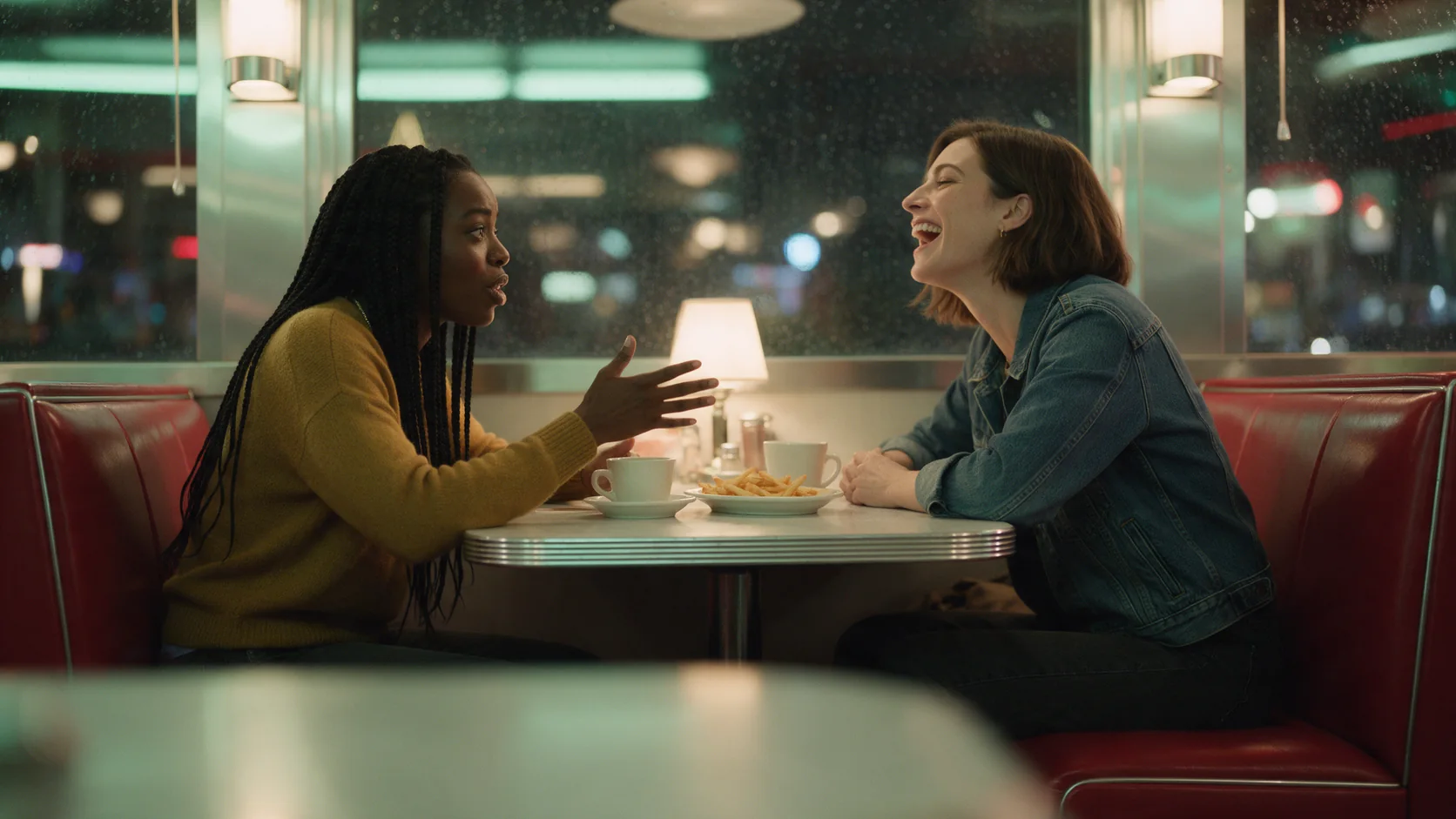
  • Two women talk and laugh across a red vinyl diner booth at night, coffee and fries on the table and rain on the window behind them, Kling 2.6 video model

    Kling 2.6

    Pick Kling 2.6 for optional sound at a fixed 1080p or its motion-transfer task; its sound-on rate still costs more than Kling 3.0 or O3 with sound on.

    Spicy Index
    37.5
    Freedom Score
    12.0

    Tested Sep 28, 2026

    Read the review
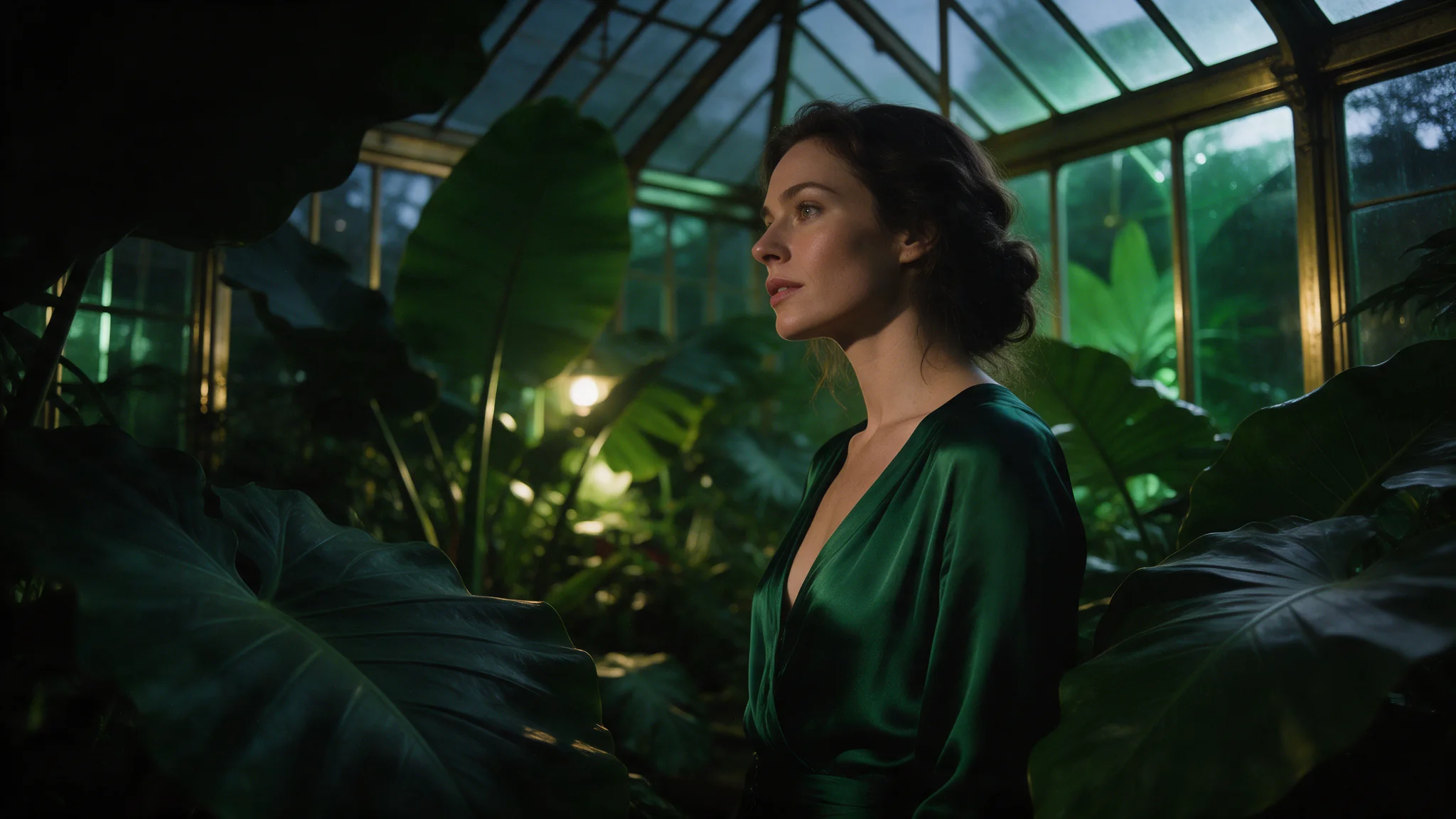
  • A woman in an emerald silk dress standing among large tropical leaves in a glass conservatory at dusk

    Wan 3.0

    Pick Wan 3.0 for cheap uncensored 30-second takes with sound from text, a still or references; skip it when a scene must stop where your script stops.

    Spicy Index
    87.7
    Freedom Score
    96.0

    Tested Sep 24, 2026

    Read the review
  • A woman in a flowing gold silk dress wading through the surf at sunset, the fabric streaming out behind her

    Seedance 2.5

    Pick Seedance 2.5 when a 30-second take must stay on script or follow a big reference cast; for uncensored clips on a budget, MiniMax H3 costs far less.

    Spicy Index
    81.4
    Freedom Score
    83.6

    Tested Sep 24, 2026

    Read the review