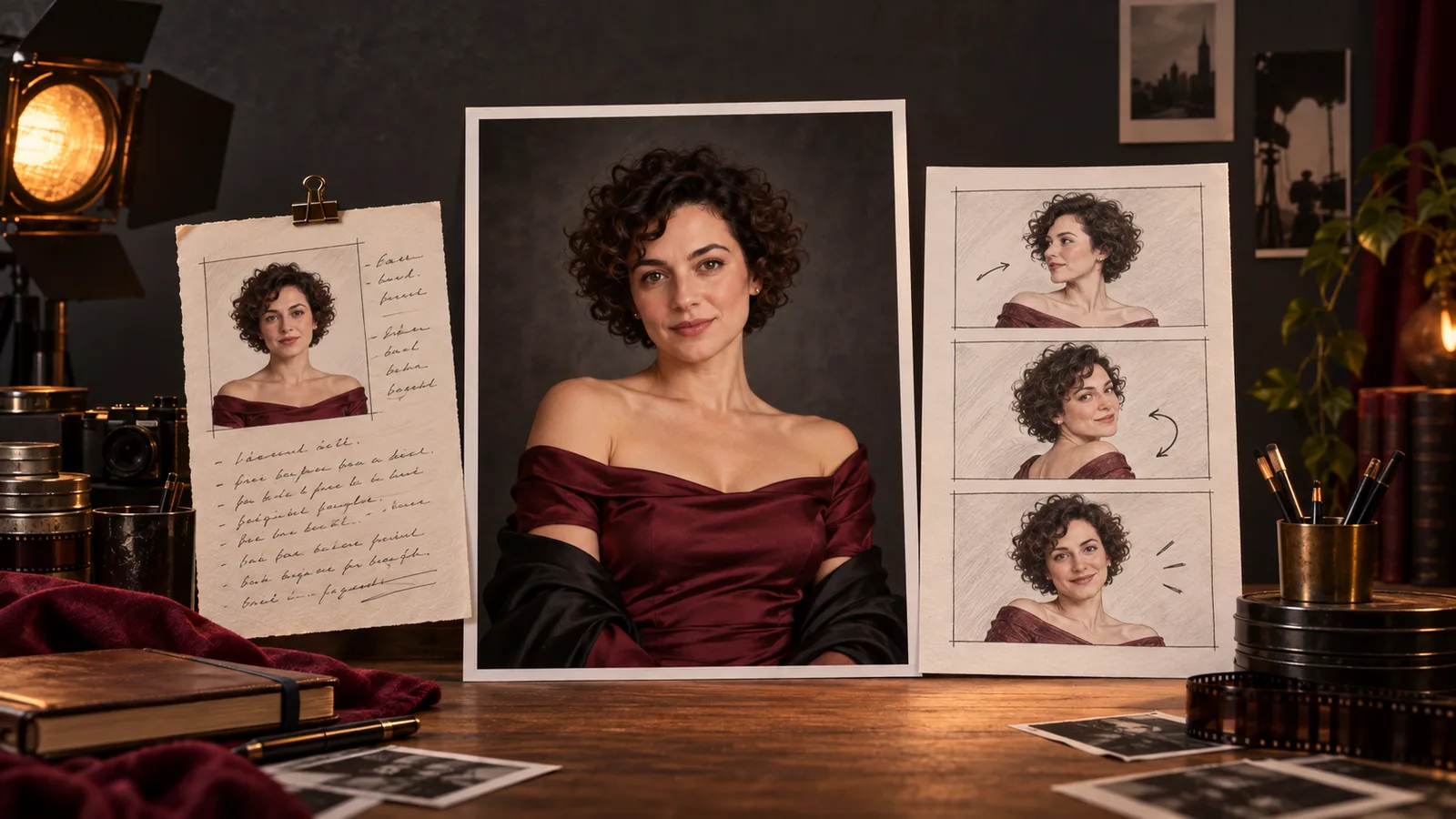
An adult character app needs more than a model that agrees to write an NSFW scene. The conversation has to stay in character, the portraits have to look like the same person, and a generated clip has to keep that appearance while moving. A permissive answer to one prompt solves only part of the job.
My starting choices are Grok 4.7 for hosted adult-fiction chat, Qwen Image 2.1 for creating and revising a photoreal character, and MiniMax H3 for short animation with sound. For local text generation, Hermes 4 14B is a useful roleplay-oriented candidate when it fits your machine; Dolphin 3.0 8B is a smaller starting point. Those local recommendations come from their documented design, not a new adult-content test of either model.
Change that combination when the task changes: DeepSeek V4 Flash reduces conversation costs, Anima Turbo targets anime artwork, Wan 3.0 supports longer takes, and Seedance 2.5 accepts a larger set of visual references. Below, the point is to choose a usable combination, rather than declare a single winner across incompatible jobs.
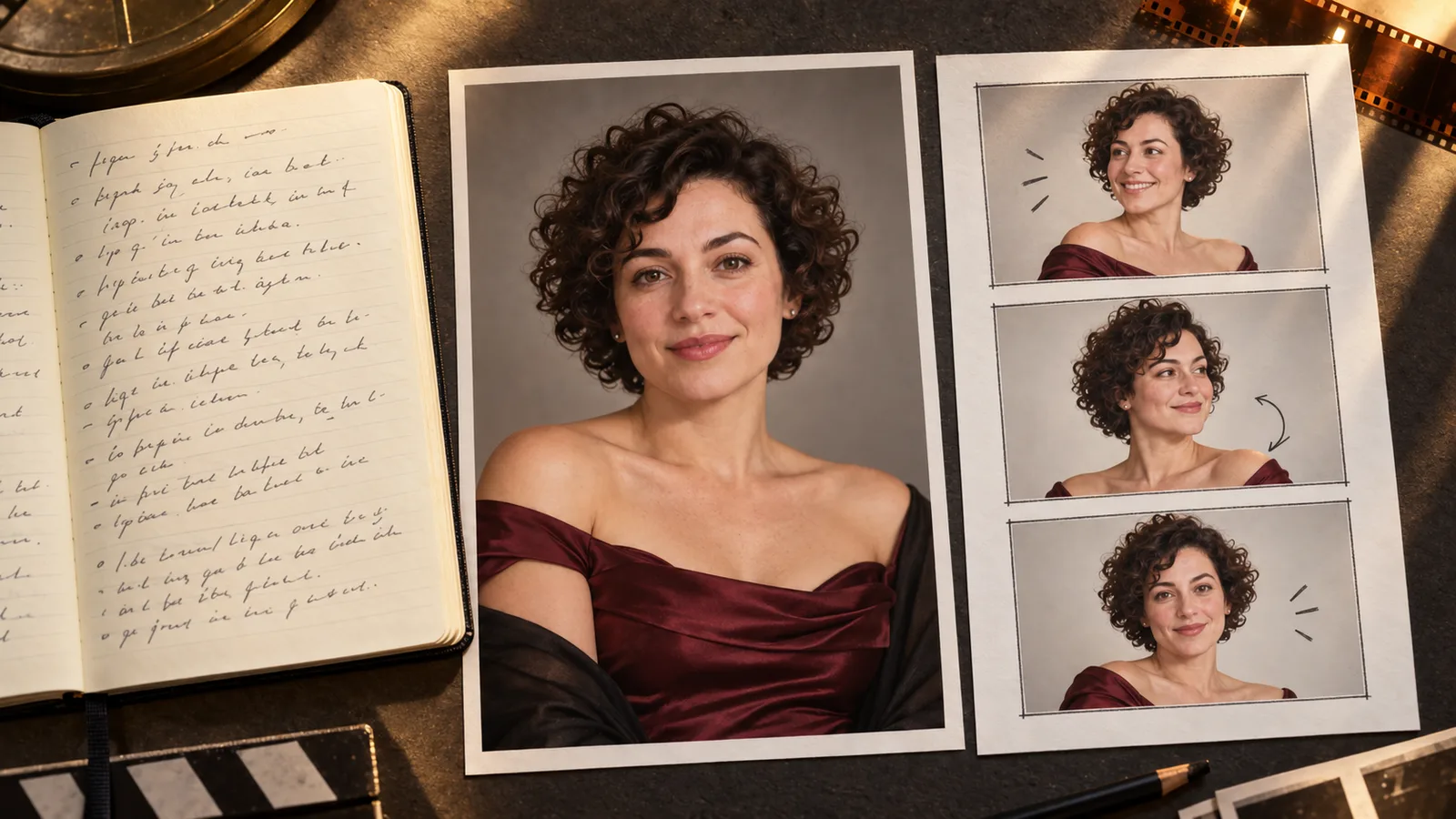
Illustration: the conversation, approved portrait and motion plan are separate parts of one character project.
The shortlist: choose by the result you need
| Your main task | Start with | Why it belongs on the shortlist | The important trade-off |
|---|---|---|---|
| Local adult-fiction writing | Hermes 4 14B | Documented steering, roleplay and structured-output support | Requires a compatible runtime and enough memory; no new NSFW test here |
| A smaller local writing assistant | Dolphin 3.0 8B | A downloadable, steerable general-purpose model | Smaller does not guarantee better character continuity |
| Hosted NSFW roleplay | Grok 4.7 | Strong direct-request results in our published roleplay tests | More expensive than the budget chat choices |
| Budget hosted fiction | DeepSeek V4 Flash | Lower token rates; fiction-framed requests worked in our tests | Direct requests did not behave like the framed ones |
| Photoreal character creation and editing | Qwen Image 2.1 | Separate generation and editing tasks; reference and mask support | An edit can still alter details you wanted to keep |
| A 2K still with lettering | Qwen Image 3.0 | 2K generation at the same listed output price as 1K | Fewer references in edit mode than Qwen Image 2.1 |
| Combining character, wardrobe and setting | Seedream 5.0 Pro edit | Up to ten references with an instruction | References need clearly assigned roles |
| Adult anime illustration | Anima Turbo | An anime-focused model with tag and sentence prompting | Its image-to-image task restyles rather than precisely edits |
| Short character animation with sound | MiniMax H3 | Image-to-video with an optional closing frame | Shorter duration ceiling than Wan 3.0 |
| A longer continuous take | Wan 3.0 | Up to thirty seconds from an opening image | Longer clips cost more and leave more time for drift |
| A larger reference-based scene | Seedance 2.5 | Image, video and audio references on its reference task | Reference-video billing differs from a simple still-to-video call |
The hosted entries are specific SpicyAPI tasks. Their behavior does not establish the policy of every website using the same model family. An uncensored text model also does not make the image or video tools connected to it uncensored.
What this ranking measures—and what it does not
This is a task-based shortlist with separate evidence for local and hosted models. For hosted adult-fiction and visual recommendations, we use our published tests and the model test records behind the current catalogue. For local LLMs, we use the maintainers' model cards and runtime documentation. We have not run a new, matched benchmark across all these options.
Our cross-category NSFW model ranking contains the detailed historical scores and test conditions. This guide answers a different question: which pieces should you combine when you want private local writing, recognizable character images and animation in the same project?
Download counts do not measure character memory or editing accuracy. Parameter count is similarly incomplete: a larger chat model may write better in your application, but its size cannot tell you whether a video generator will preserve a face.
For NSFW work, read a result in three stages. Did the service accept the request? Did the output contain the requested content, rather than a toned-down substitute? Did it remain useful—coherent prose, the right character, plausible anatomy or sustained motion? Passing the first stage is not a quality verdict.
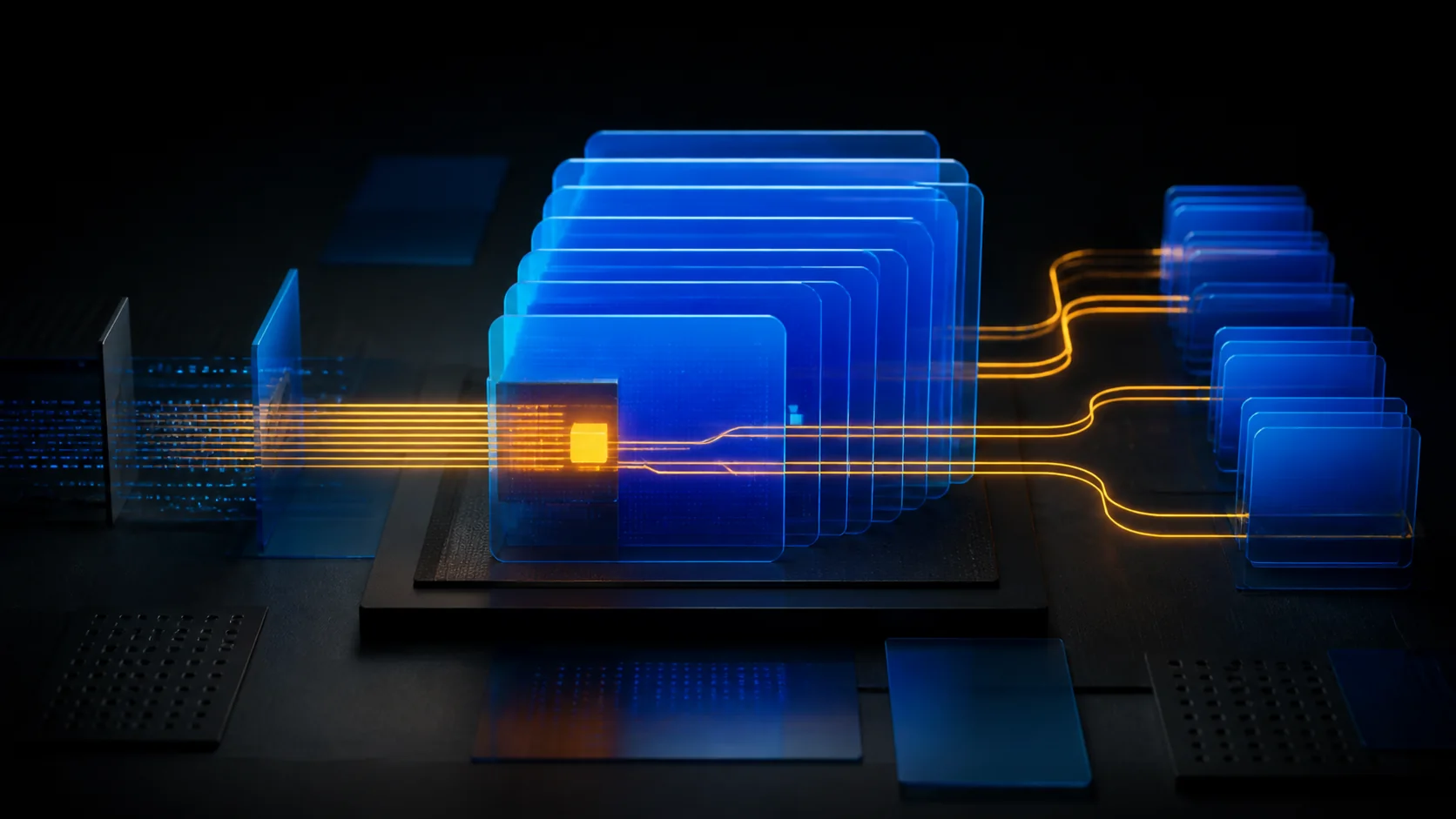
That distinction also limits what an illustration can show. The explanatory pictures in this article describe the workflow. They are not outputs from the ranked models or evidence of their maximum content range.
Local uncensored LLMs: choose control and fit before size
Local text generation is attractive when you want to keep unpublished character sheets and conversations on your own machine. It also lets you hold a model version steady. But “local” describes where inference happens; it does not guarantee the model's writing quality or remove every refusal learned during training.
Hermes 4 14B: a candidate for character writing and structured scene notes
Nous Research's Hermes 4 14B model card describes a Qwen 3 14B-based model with roleplay, steering, structured output and optional reasoning. Quantized variants are available for compatible local applications. Those capabilities make it worth considering for an adult-fiction project that needs both dialogue and machine-readable scene notes.
Ask for the character reply and visual brief separately. The latter can contain the room, outfit and expression. This keeps a long first-person conversation out of an image prompt whose job is to describe one frame.
- Choose it when: you can accommodate a 14B model and want direct control over the character instructions and output format.
- Consider a different route when: you need dependable hosted availability immediately, or your machine becomes slow at the conversation length you actually use.
For a desktop start, open LM Studio's Discover tab, search Hermes-4-14B, select a compatible GGUF quantization, download it, then load it in Chat. Confirm the result is Hermes 4 on Qwen 3 14B, rather than similarly named Hermes 3 weights. LM Studio's download guide explains the format and quantization choices; its general starting recommendation is a 4-bit option or higher when your machine can run it. We have not measured this model's NSFW success rate or hundred-turn character continuity.
Dolphin 3.0 8B: the smaller entry point
Dolphin 3.0 on Ollama is based on Llama 3.1 8B. The listed standard download is about 4.9 GB, with a nominal 128K context window. Its maintainers emphasize owner-controlled instructions and a steerable general-purpose assistant.
That makes it a reasonable way to try local drafting before downloading a much larger model. You can use it for character biographies, alternative dialogue, scene summaries and initial visual briefs. Its general-purpose design is also why it should not automatically rank above a specialized fiction model for your favorite writing style.
The download size is not a complete memory requirement. The runtime, conversation cache and other loaded applications also use memory. An advertised context window is not the context you are necessarily running. Start with the runtime's chosen settings and check how much history it is actually retaining before blaming a forgotten detail on the model.
Getting a local model running without misreading the hardware claims
Ollama provides a straightforward starting path after installation:
ollama run dolphin3
ollama ps
The first command downloads and runs the model if needed. The second shows the loaded model, processor allocation and active context. These commands are installation guidance; we have not benchmarked them on your hardware.
Ollama's context-length documentation explains that a larger context requires more memory. A model that responds quickly to a short biography can slow down once you send a long conversation. Reduce the active history or use a concise scene summary before assuming you need a larger model.
You do not necessarily need a dedicated GPU to run a text model. Ollama supports CPU loading and partial CPU/GPU offloading, although that changes speed. Its FAQ also distinguishes local inference from cloud-hosted models and provides a local-only setting. If keeping text on your device is the reason for choosing this route, check the runtime, frontend, cloud features and any connected tools together.
For an adult character, memory needs more than a large token limit. Keep a short, stable character sheet separate from the changing scene summary: age, appearance, relationships, speaking style and current location. Update the summary when the scene changes. A chat model can only use the history your application actually sends.
This addresses a recurring community problem. In a LocalLLM discussion about long-form roleplay, the poster wanted fewer refusals but also reported personality drift and scenes escalating too quickly. That is a useful selection question, not proof that one recommended model fixes it. Permissiveness and narrative control are separate qualities.
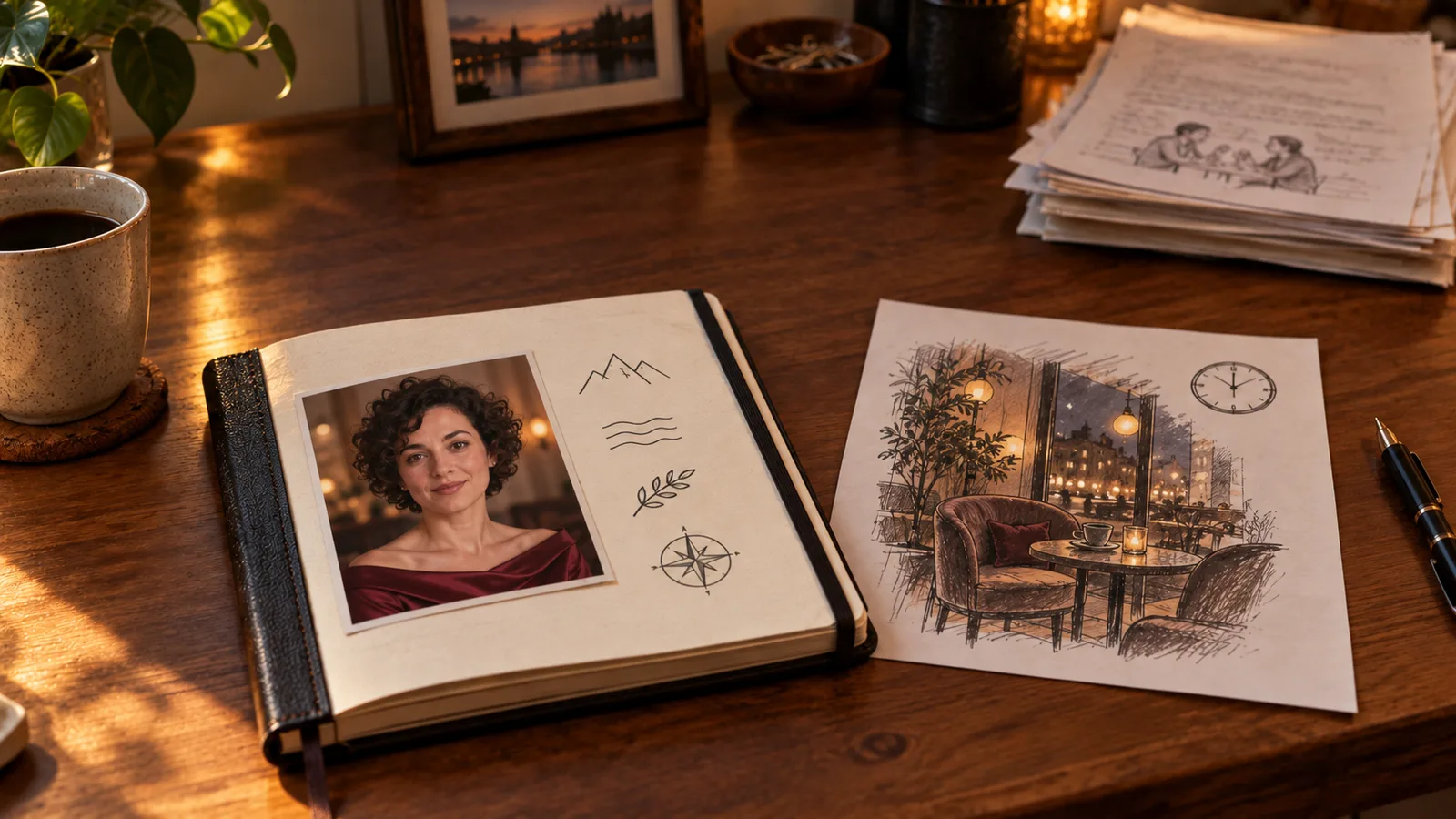
Illustration: stable character details and the current scene summary serve different roles in a long conversation.
Hosted LLMs: Grok for direct writing, DeepSeek for a lower budget
Hosted text generation removes the need to keep a local model loaded and lets you start from a browser or application client. For an NSFW project, the reason to choose a particular hosted model is its observed response to your kind of writing—not simply its general reasoning score.
Grok 4.7: the first hosted option I would try for adult fiction
In our September 22 roleplay evaluation, Grok 4.7 completed all nine requests across three ways of asking, including the direct requests. That gives it a stronger starting case for adult-fiction chat than a model which only responded under a particular fiction setup. The Grok 4.7 roleplay article explains that evaluation; it is not a test of every scene or a measure of long-term character memory.
The Grok 4.7 chat task lists a 500,000-token context. For ordinary fiction below its long-context pricing threshold, the public rates are $2.00 per million input tokens and $6.00 per million output tokens, before any applicable caching.
At those rates, one hundred turns with 10,000 input tokens and 1,000 output tokens each cost $2.60: $2.00 for one million input tokens plus $0.60 for 100,000 output tokens. This is a worked estimate with a fixed history size, not the bill for a conversation whose history grows every turn. Additional reasoning output can also change the total.
Use clear fiction instructions even when a model accepts direct requests. Tell it who speaks, what the current scene is, how long a response should be and whether it may move the scene forward. For interactive roleplay, “do not write the user's dialogue or decisions” is often more useful than a paragraph of generic freedom claims.
DeepSeek V4 Flash: the budget choice with a different writing setup
DeepSeek V4 Flash chat has public rates of $0.44 per million input tokens and $1.32 per million output tokens. The same fixed-history example costs $0.572, approximately $0.57, before caching and additional reasoning output.
Our earlier adult-fiction tests found an important distinction: direct requests were declined, while novel framing and a fiction system prompt produced qualifying responses in the tested samples. That supports trying it for a clearly defined fiction application. It does not support promising that any direct NSFW request will work because the catalogue calls the task unrestricted.
I would start here for scene outlines, character summaries and cost-sensitive fiction, then choose Grok when the direct writing behavior matters more than the difference in token rates. A model that writes shorter scenes may also need another turn to reach the detail you wanted; compare the whole exchange, rather than just its per-token price.
For deeper hosted-chat selection, including the other tested models, see our roleplay LLM comparison. A local model remains the alternative when keeping the text on your device is the main requirement.
Image models: creating a character and keeping one are different jobs
An adult creator often needs an image series, not a single attractive result. The most important fork is whether you are inventing a character from text or changing a character you have already approved. Repeating the same description can create a recognizable theme, but it is a weak substitute for supplying the actual face and composition you want to retain.
Qwen Image 2.1: start here for a photoreal character with an editing path
Qwen Image 2.1 text-to-image costs $0.024 at 1K and $0.048 at 2K. Its separate editing task takes up to ten references and supports a black-and-white mask for local changes. An edit's live estimate depends on its configuration and reference inputs; the generation price is not an editing quote.
The company's September tests include mature-character generation and editing, with both fulfilled and softened outcomes in the broader records. That gives Qwen a relevant content history while leaving room for request-dependent variation. It does not mean every result has correct hands or that a reference face remains untouched.
My practical reason to choose it is the ability to move from invention to revision. Generate a few character concepts, approve one, then use that original as the reference for later scenes. If only the setting needs to change, specify what stays: face, hair, outfit, pose and framing. A mask is useful when the task can genuinely be limited to a region; it is not a promise of perfect preservation outside it.
For a fictional adult companion, this can be the difference between a series of unrelated portraits and a usable character library. Do not keep editing an increasingly altered result just because its face is almost right. Returning to the approved original gives the next request a clearer starting point.
Qwen Image 3.0: choose it when the final image needs 2K and lettering
Qwen Image 3.0 text-to-image lists $0.03 per image at either 1K or 2K. Its documented typography support makes it relevant for a mature character poster, a title card or a scene containing a short quoted sign.
That is a specific reason to switch, rather than assuming the higher version number improves every aspect of every portrait. Spell the visible wording exactly and keep it short enough to inspect. If the purpose is an image with a recognizable character and a title, judge both: a readable title cannot compensate for the wrong face.
Qwen Image 3.0's edit task accepts up to three references. Qwen Image 2.1 accepts more. That difference matters if you already have a multi-angle character set plus separate wardrobe and location references; it matters much less if you are generating one poster from text.
Seedream 5.0 Pro edit: give each reference a job
Seedream 5.0 Pro edit accepts one to ten reference images and produces one image at 1K or 2K. Its catalogue output rates are $0.036 and $0.072 respectively; use the request estimate for the configuration you submit.
It is a useful alternative for assembling a character, outfit and setting. For example: “Use image one for the adult character's face and hair, image two for the opaque satin outfit, and image three for the room. Keep the camera at eye level.” That is an unrun creative example, but it shows the kind of instruction the task can accept.
More references are not automatically better. Three photographs showing different hairstyles can give the model contradictory appearance cues. If identity drifts, simplify the reference set and change fewer things together. Our earlier Seedream edit tests included both fulfilled results and a cropped, softened result, so its mature-content history should not be read as a preservation guarantee.
Anima Turbo: use an anime model for an anime project
Anima Turbo text-to-image targets anime and illustration, accepts tags or sentences, and costs $0.012 at 1K or $0.024 at native 1.5K. Its October 5 test records include adult-character probes; those records establish behavior in the tested samples, not a universal quality ranking over every anime checkpoint.
Its image-to-image task is a restyling path. It is suitable when you want an existing composition redrawn as an illustration. It is a poor match for a precise instruction such as changing only a cuff while preserving every other pixel. For that job, choose an instruction editor.
The text-to-image task does not expose a negative prompt, sampler, step count or guidance control. Describe the character, composition and exclusions in the supported prompt instead of copying a long local-diffusion settings recipe into fields this task does not have.
Video models: pick the right starting material before the tier
For an existing NSFW character, image-to-video is usually the more direct starting point because the still already contains the appearance and scene. Text-to-video invents that opening composition. Reference-to-video uses materials to influence the shot without necessarily treating one image as its first frame.
MiniMax H3: short animation with sound
MiniMax H3 image-to-video accepts an opening frame and optional closing frame, with a motion prompt. The task supports four to fifteen seconds with generated audio. Five seconds cost $0.185 at 768p or $0.29 at 2k.
Its mature-content evidence includes fulfilled tests using AI-generated input images. That qualification matters: it does not establish the behavior of every real photograph. Its reference task also has a different evidence history from its opening-frame task, so do not treat the family name as a universal input guarantee.
For a character greeting, begin with the expression, outfit and framing already approved in the still. Ask for one principal action—looking toward the camera and speaking a short line, for example—before adding large camera movement or a complicated sequence. This is a suggested production approach, not a claim that we measured a success rate for that example.
Wan 3.0: when a short clip is not enough
Wan 3.0 image-to-video supports two to thirty seconds, an optional closing image and generated audio. At 480p the public rate is $0.045 per second: five seconds cost $0.225, ten seconds $0.45 and thirty seconds $1.35.
That makes it a useful candidate for a slower scene or a longer character introduction. The September records include fulfilled higher-intensity adult probes, with variation across tasks and individual runs. They support considering the model for this work; they do not guarantee that a thirty-second clip remains as consistent as a short test.
Write the action sequence to fit the duration. For a longer take, make the beginning, middle and ending clear. If the face drifts early, paying for more seconds will not repair that first section. Shorten the motion brief or revise the opening frame before scaling up the duration.
Seedance 2.5: when the references do more of the directing
Seedance 2.5 reference-to-video accepts up to thirty images, ten video clips and ten audio tracks. Those limits matter when you want a character's appearance, a room, camera movement and a sound reference to influence one shot.
Keep their jobs distinct. A character image supplies appearance; a motion clip supplies movement; an audio track supplies sound or timing. A large collection of unlabelled references gives you less clear control than a small set with explicit roles.
Reference-video billing can include the duration of input clips. Do not multiply only the requested output seconds by the lowest displayed rate and call that the total. For a simpler Seedance 2.5 opening-frame task, five seconds at 480p calculate to $0.617 at the listed $0.1234-per-second rate. The reference task's estimate needs its own inputs.
If you only need inexpensive, silent motion from a still, Wan 2.2 Spicy image-to-video is another option: five seconds at 480p cost $0.095 with prompt expansion off. Its fixed five- or eight-second lengths and lack of audio are meaningful limits, not small-print differences from the models above.
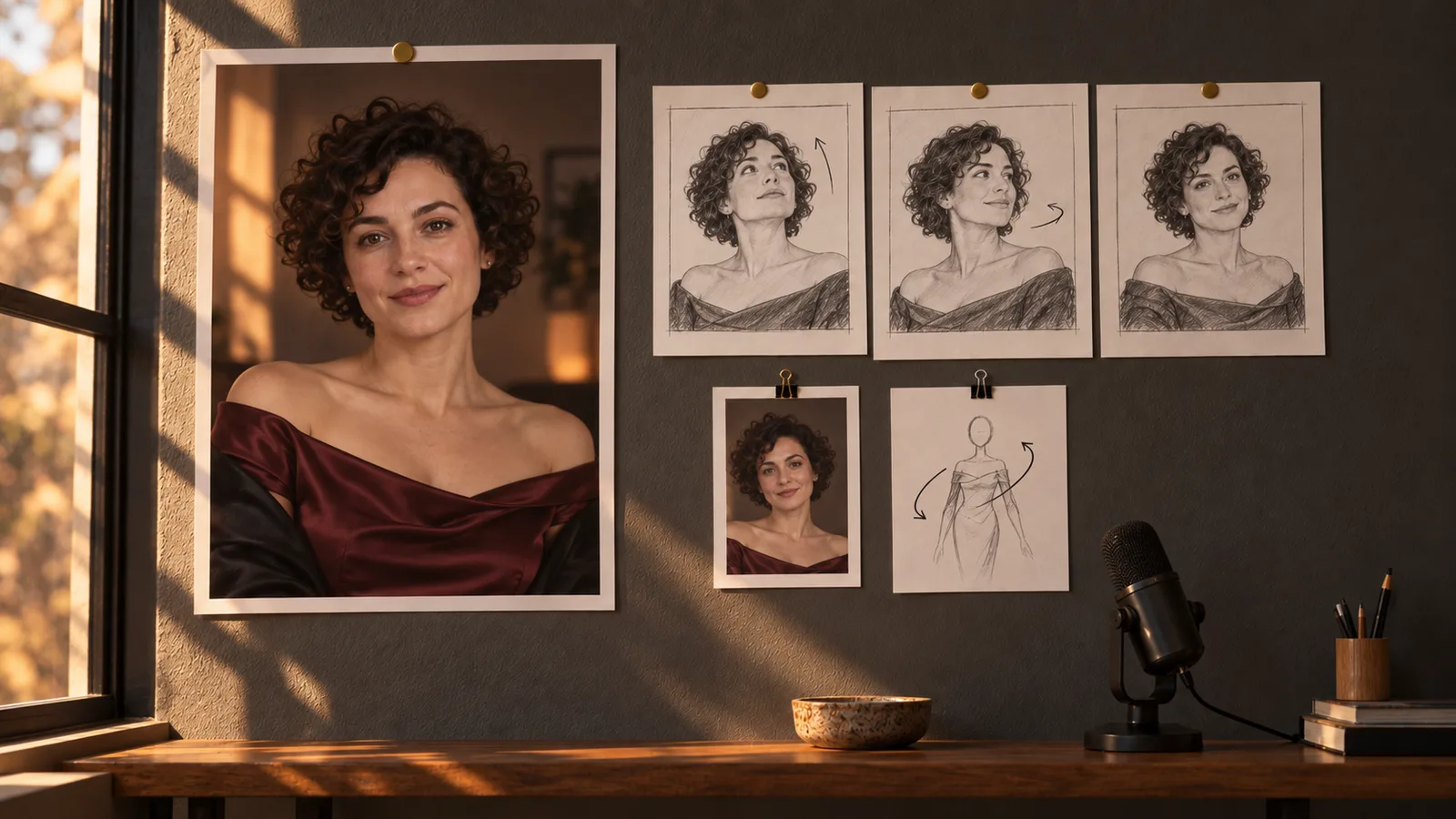
Illustration: an opening frame, movement reference and sound reference contribute different information to a clip.
A usable combination for one adult character project
Suppose you are making a fictional adult companion with short conversations, a small portrait library and occasional animated greetings. This is a planning example, not a production run we performed.
Begin with the text model. Write a compact character sheet that defines voice and relationships, then a current-scene summary. Keep the visual description separate: face, hairstyle, outfit and location. Choose Grok for the more directly supported hosted writing behavior, DeepSeek for lower token costs, or a local LLM when the text should stay on your own machine.
Next, generate the portrait concepts. Pick the visual model by style: Qwen Image 2.1 for the photoreal path described here, Anima Turbo for illustration. Approve an original before making a library. Use editing when a new scene must keep that original character, instead of treating each image as an unrelated text generation.
Only then animate selected frames. Choose MiniMax H3 for a short greeting with sound, Wan 3.0 for a longer take, or Wan 2.2 Spicy for a silent preview. A character image should not be generated on every chat turn simply because the application can call an image API. Trigger it when the scene or visual request actually changes.
The arithmetic makes that separation concrete:
| Planned calls | Configuration | Generation cost |
|---|---|---|
| 20 Qwen Image 2.1 portrait concepts | 1K, $0.024 each | $0.48 |
| 10 MiniMax H3 clips | Five seconds, 768p, $0.185 each | $1.85 |
| 100 Grok 4.7 turns | 10K input and 1K output tokens per turn | $2.60 |
| Total for these planned calls | Before edits, retries, storage or extra reasoning output | $4.93 |
Replacing those text turns with DeepSeek V4 Flash reduces this calculated total to $2.902. These are generation budgets, not promises of twenty usable portraits or ten usable clips. Every successful but unsuitable output can require another paid attempt. Editing and reference inputs also need their own estimates.
A useful cost measure is the amount spent to obtain the approved portrait or finished clip. If the character is right but the fingers are wrong, a targeted edit may be more sensible than generating another whole scene. If the video starts from the wrong portrait, choose a better still before paying for more animation attempts.
Questions worth answering before you choose
Does an uncensored LLM also generate uncensored images and video?
Not by itself. A text model can write the visual brief, but image and video generation use separate models and tasks. Check each stage's content behavior and inputs. A permissive chat response is not evidence about the connected image service.
Is running locally always free and private?
Local inference avoids a per-request hosted-model bill, but still uses hardware, electricity and your time. Its privacy advantage applies when the model runs on your machine and your frontend or connected tools do not send the content elsewhere. Ollama also supports cloud features; local-only operation is a setting to verify, not an assumption about every setup.
Can I use a real person's photographs?
Use images you have the right to upload and edit, with the identifiable adult's explicit consent for the intended adult-oriented transformation. Permission to use the original photograph alone is insufficient. The mature-character examples discussed here use fictional adults; their tests do not establish how a task handles real-person photographs.
Which combination I would start with
For a hosted photoreal character project, start with Grok 4.7, Qwen Image 2.1 and MiniMax H3. The writing, editing and short-animation tasks have relevant evidence, and each handles a different part of the work. Move to DeepSeek V4 Flash when conversation costs matter more, Anima Turbo when the artwork is anime, or Wan 3.0 when the motion genuinely needs a longer take.
For local writing, start with Hermes 4 14B if it fits your machine, or Dolphin 3.0 8B for the smaller download. Keep the hosted visual tasks separate from that privacy decision. Choose one character and one scene first; get the conversation, approved portrait and short clip working before expanding the library.