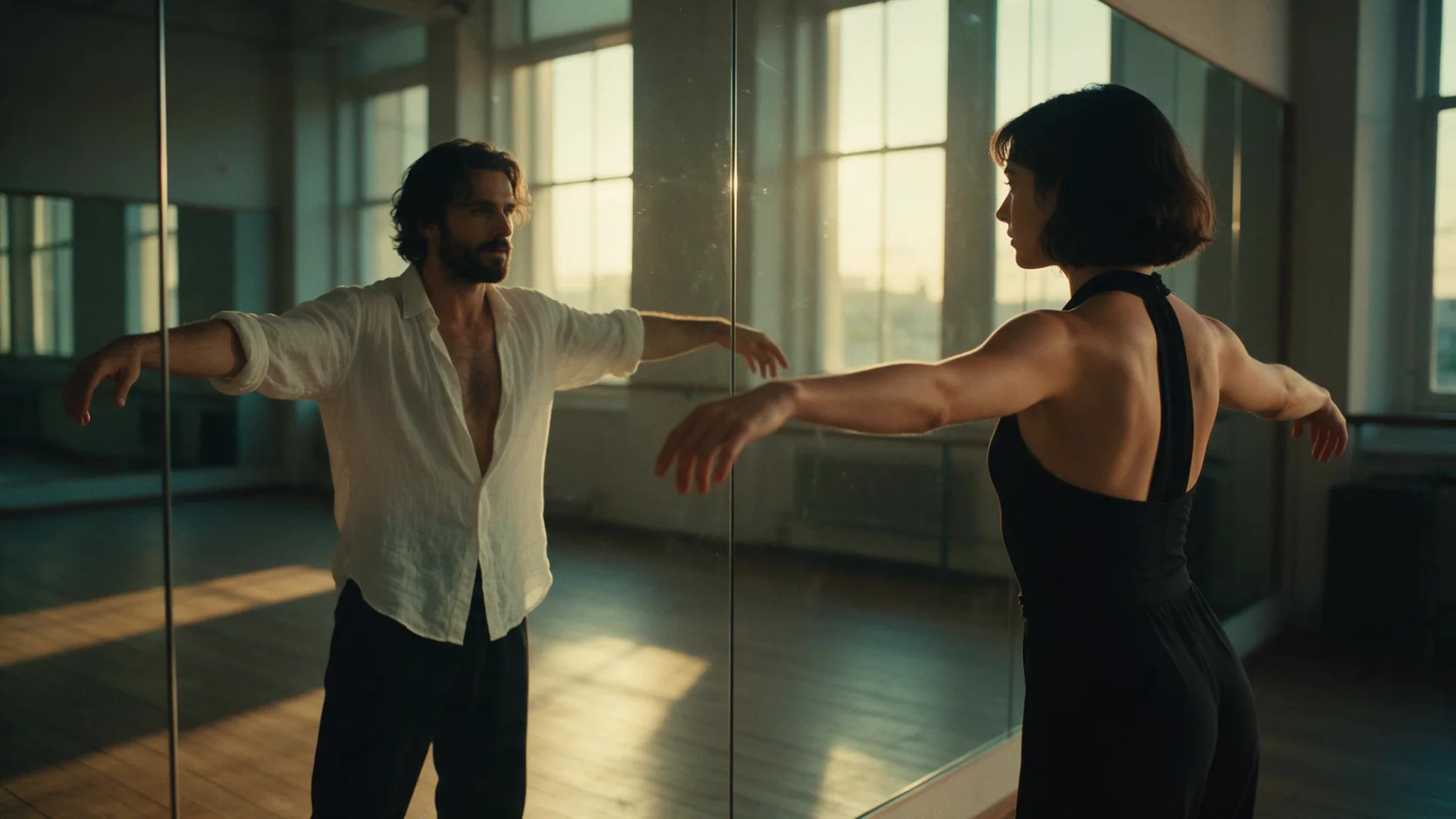
Introduction
MiniMax H3 Singularity LoRA Reference to video builds one shot from your reference material on Singularity, the community's HDR-trained fine-tune of the open-weights MiniMax H3, with up to three of your own H3 LoRAs loaded. Send up to nine images, three clips and three audio clips, name them by number in the prompt, and get 3 to 15 seconds at 480p to 1080p with a stereo soundtrack in one of seven aspect ratios.
Choose a mode by starting material
| What you have | Mode |
|---|---|
| an opening image | MiniMax H3 Singularity LoRA Image to video |
| reference images, clips or audio | MiniMax H3 Singularity LoRA Reference to video |
| a written scene only | MiniMax H3 LoRA Text to video |
Key features & highlights
Choreography from a clip, identity from stills
A reference clip hands over the movement and camera, and still images pin the face and the costume. Singularity's training on fast, high-dynamic-range action keeps that borrowed motion sharp instead of smeared.
Standard H3 LoRAs on a sharper base
Any LoRA trained for MiniMax H3 loads here unchanged. Pair a character LoRA with stills of the same person for the firmest identity hold.
Uncensored references and output
References are taken as they are, whatever they show. With a matching LoRA and our strongest content prompt the shot rendered as written with the referenced subject, and the soundtrack came back in the same file.
Request parameters
| Parameter | Required | Description |
|---|---|---|
prompt | Yes | Map every input to one job first (<Picture 1> is the fighter, <Video 1> is the move), then write the action in beats and finish with the sound. at least 1 characters · at most 7000 characters |
reference_image_urls | No | Up to nine images; each adds a per-reference charge. Use them for the face, the outfit and the location. at least 1 items · at most 9 items |
reference_video_urls | No | Up to three clips for choreography or camera. Billed like output seconds, capped at 15 in total; their sound is used automatically. at least 1 items · at most 3 items |
reference_audio_urls | No | Up to three audio clips for a beat, a voice or impacts. Each adds a per-reference charge. at least 1 items · at most 3 items |
aspect_ratio | No | 16:9, 9:16, 1:1, 4:3, 3:4, 21:9 or 9:21. Does not change the price. |
resolution | No | 480p, 540p, 768p or 1080p. The per-second rate rises with each step. |
duration_seconds | No | Output length from 3 to 15 seconds; reference clip seconds are added when billing. |
loras | No | Up to three {path, scale} entries trained for MiniMax H3; scale 0 to 4. Default: |
seed | No | Keeps takes comparable while you swap references. |
Pricing
Billed per second at the chosen resolution; reference clip seconds count as billed seconds (up to 15 in total), and each reference image or audio clip adds a per-reference charge. LoRAs add no separate charge.
| Specification | Price |
|---|---|
| $0.06 / second |
| $0.09 / second |
| $0.12 / second |
| $0.24 / second |
Use cases
Restage a routine with a new performer
Send the routine as Video 1 and the new performer as Picture 1, then describe the setting. The move carries over; the person and the place are yours.
Consistent fighters across a sequence
Keep each fighter's stills and LoRA fixed and change only the beat you describe. Wide shots keep their faces better on this fine-tune than on the regular model.
Music-driven cuts
Add the track as Audio 1 and ask for movement on the beat. Combined with a reference clip of the dance, the result follows both the rhythm and the choreography.
Prompt guide & pro tips
Keep reference clips short and clean
A two to four second clip of exactly the move you want works better than a long take, and it costs less: clip seconds are billed like output seconds, up to 15 in total. Trim away the run-up and the landing you do not need, and prefer a locked-off camera in the reference so the model reads the body movement rather than the operator's.
Give each still a single job
One image for the face, one for the outfit, one for the room. Overlapping stills of the same subject from similar angles add cost without adding control. Then write the prompt in beats: Picture 1 enters, copies the spin from Video 1, lands facing the camera, with the drum hit from Audio 1 on the landing.
Plan for the render time
Singularity renders more slowly than the regular MiniMax H3 LoRA family; our five-second 480p reference shot took about 80 seconds. Settle the choreography at 480p before stepping up to 1080p.
API quick start
# Generate the idempotency key once; reuse it when retrying after a lost response.
export SPICY_IDEMPOTENCY_KEY="${SPICY_IDEMPOTENCY_KEY:-$(uuidgen)}"
curl -X POST https://api.spicyapi.ai/api/v1/jobs/createTask \
  -H "Authorization: Bearer $SPICY_API_KEY" \
  -H "Content-Type: application/json" \
  -H "Idempotency-Key: $SPICY_IDEMPOTENCY_KEY" \
  -d '{
  "model": "minimax/h3-singularity-lora/reference-to-video",
  "input": {
    "aspect_ratio": "16:9",
    "duration_seconds": 5,
    "prompt": "A slow aerial shot drifting over a misty pine forest at sunrise",
    "resolution": "480p",
    "reference_image_urls": [
      "https://example.com/reference.png"
    ]
  }
}'

# Copy data.taskId from the response into TASK_ID, then poll the status.
TASK_ID="TASK_ID_FROM_RESPONSE"
curl "https://api.spicyapi.ai/api/v1/jobs/recordInfo?taskId=$TASK_ID" \
  -H "Authorization: Bearer $SPICY_API_KEY"
See the API reference for authentication, the complete schema, polling, and error handling.