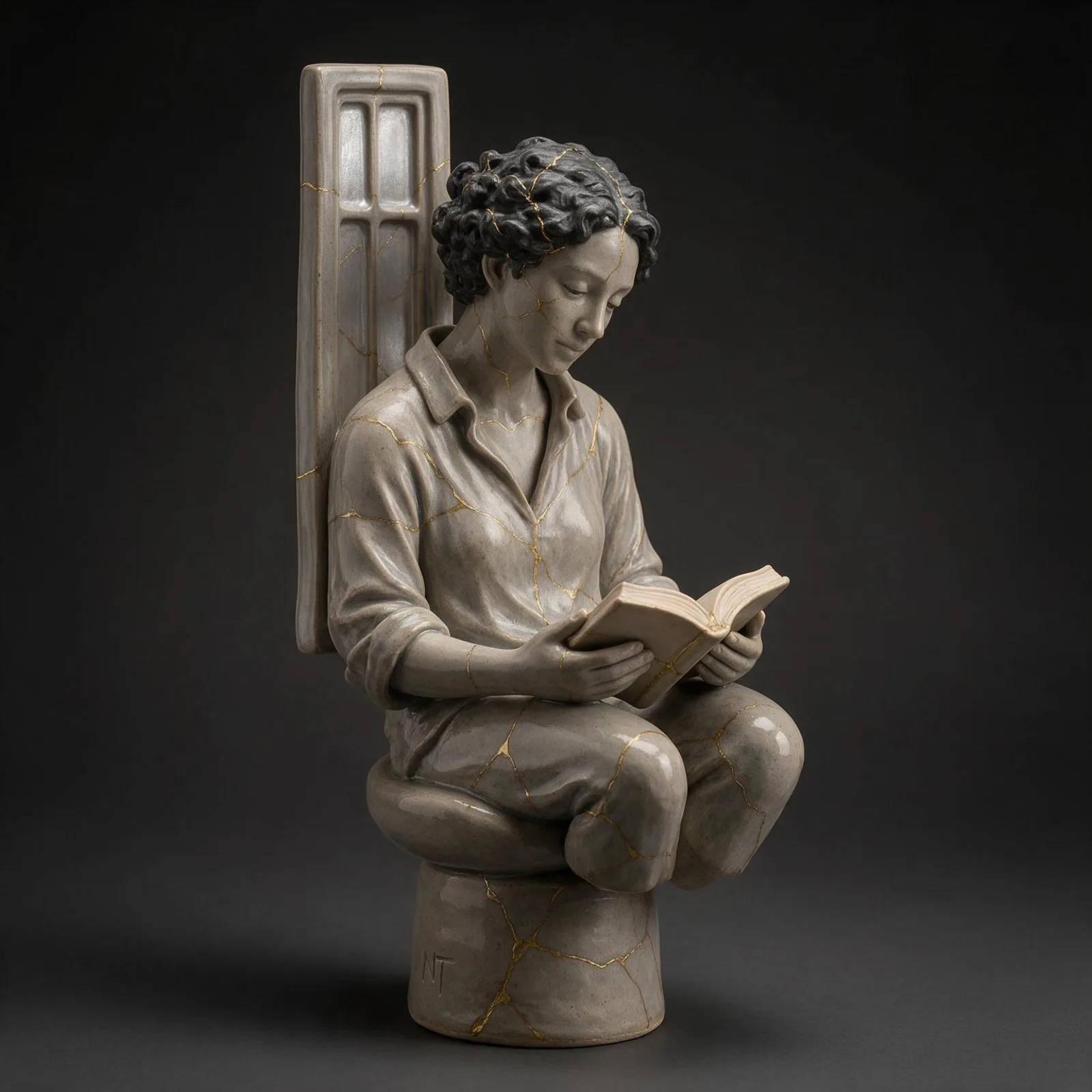
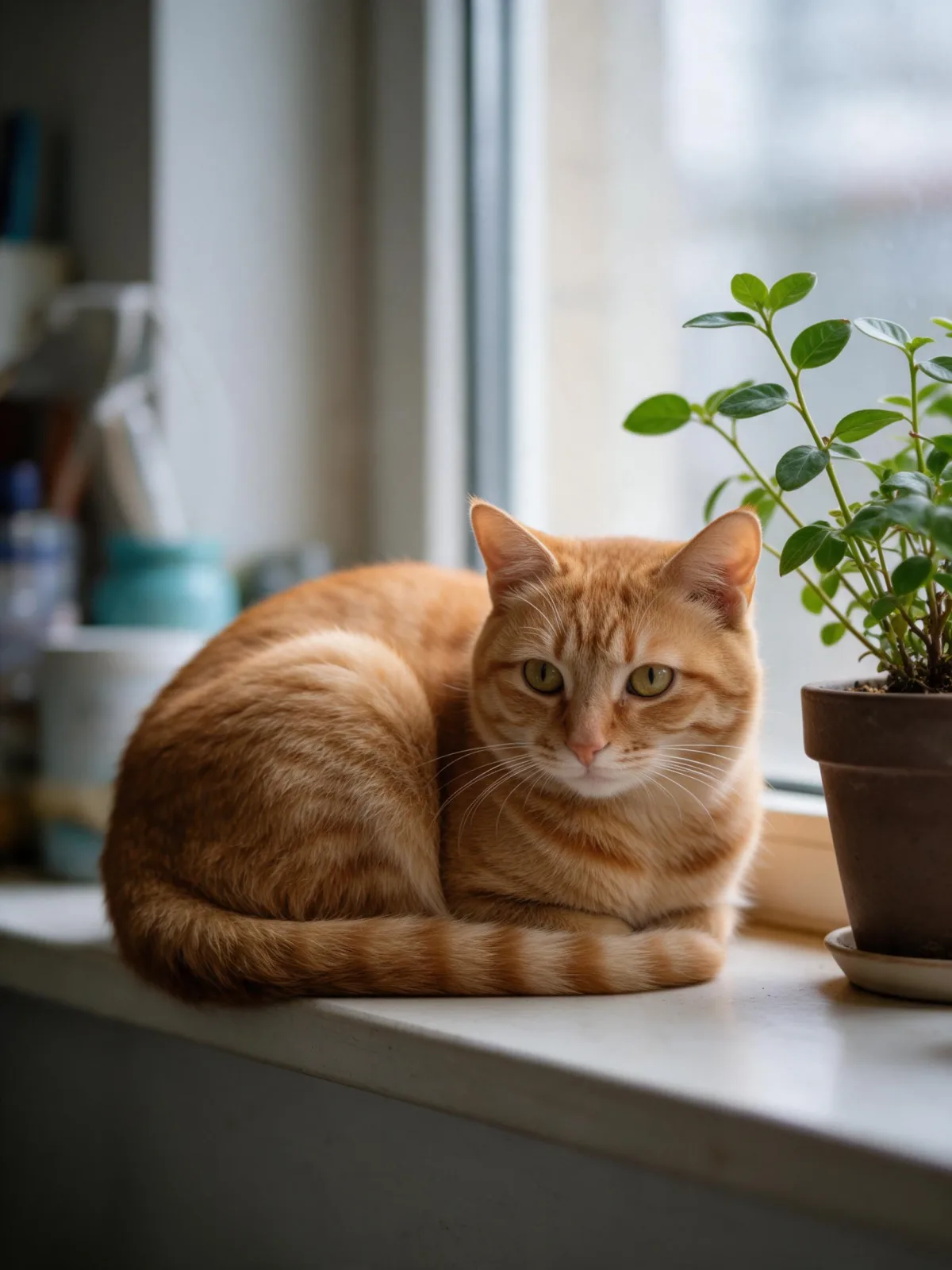
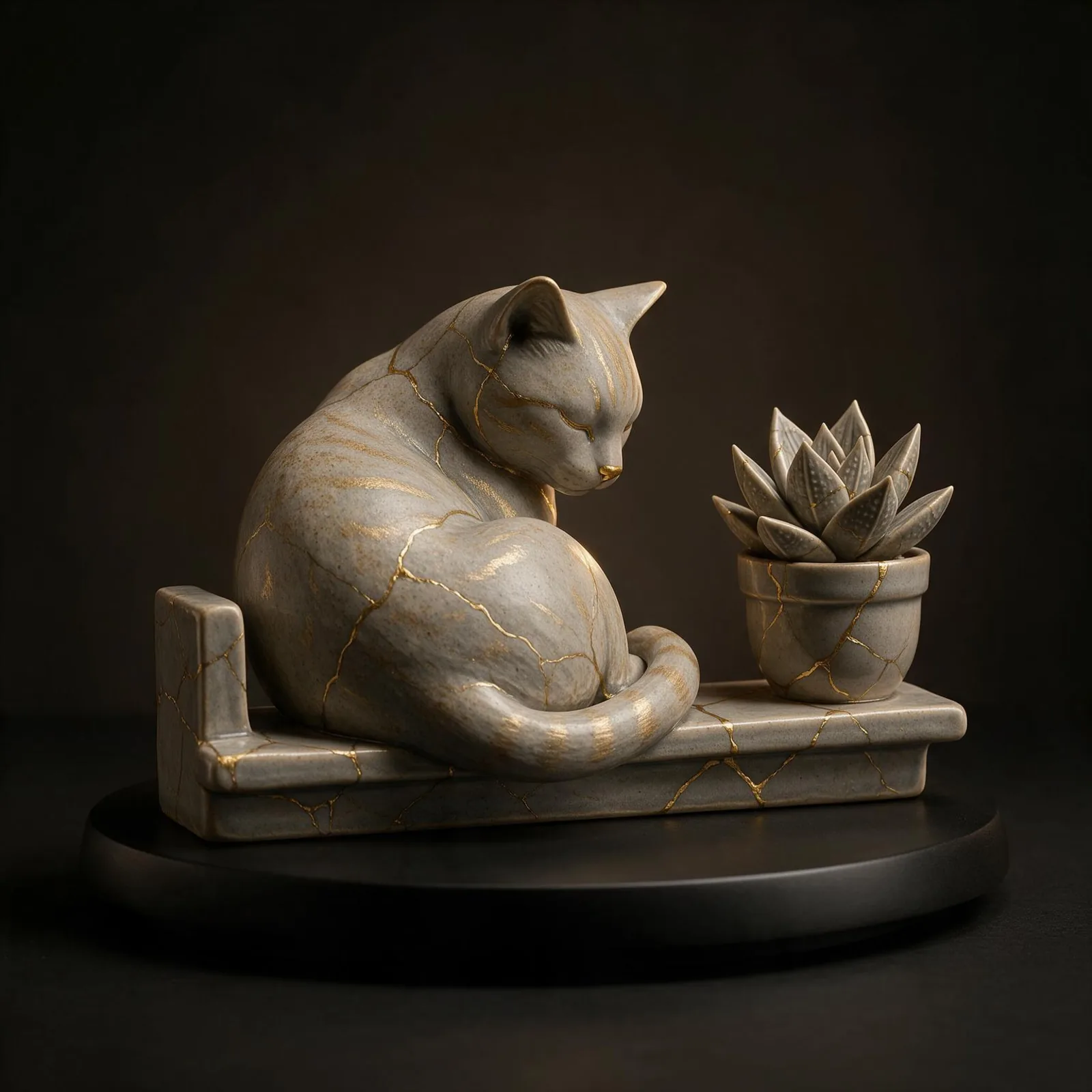
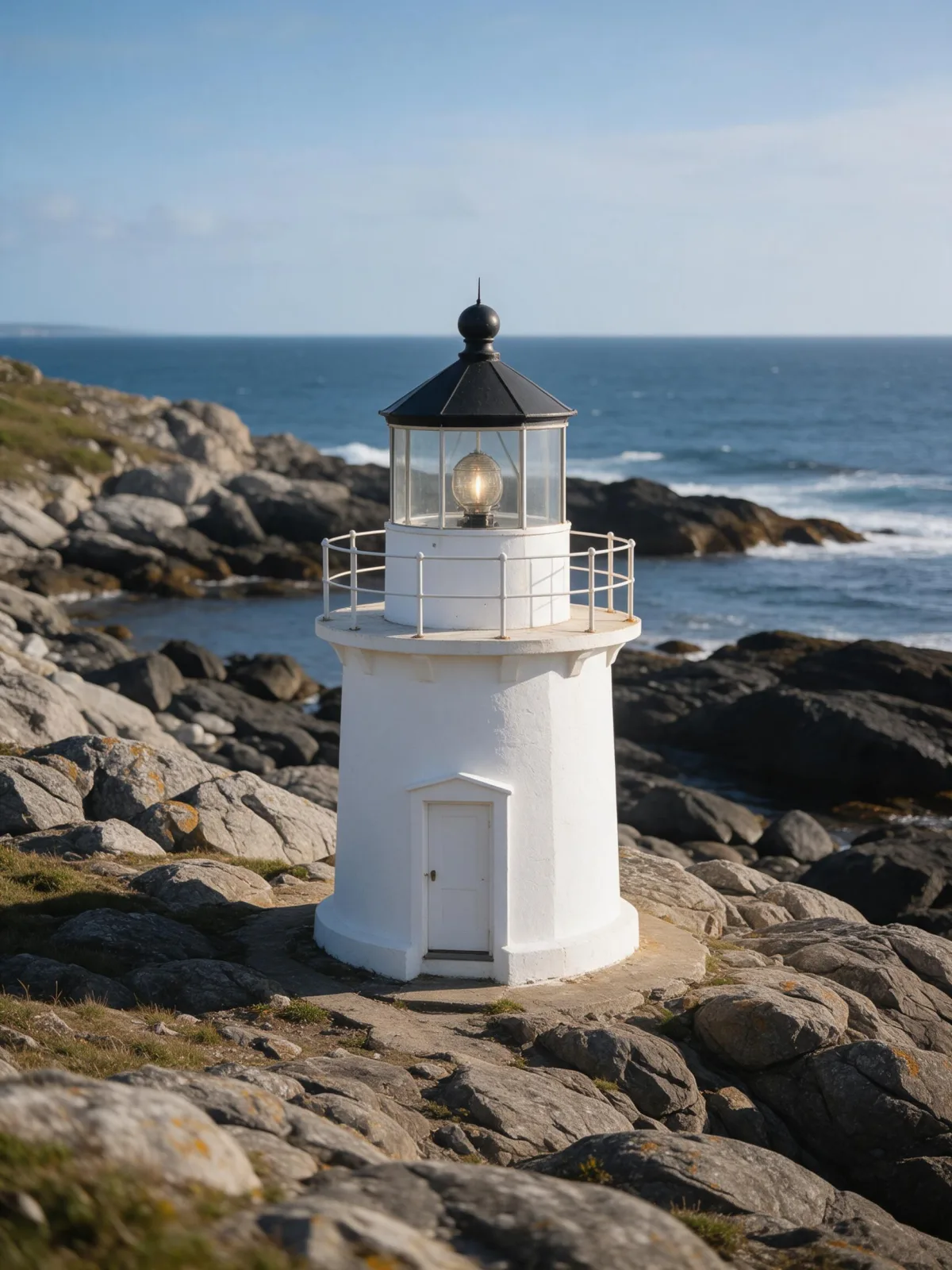
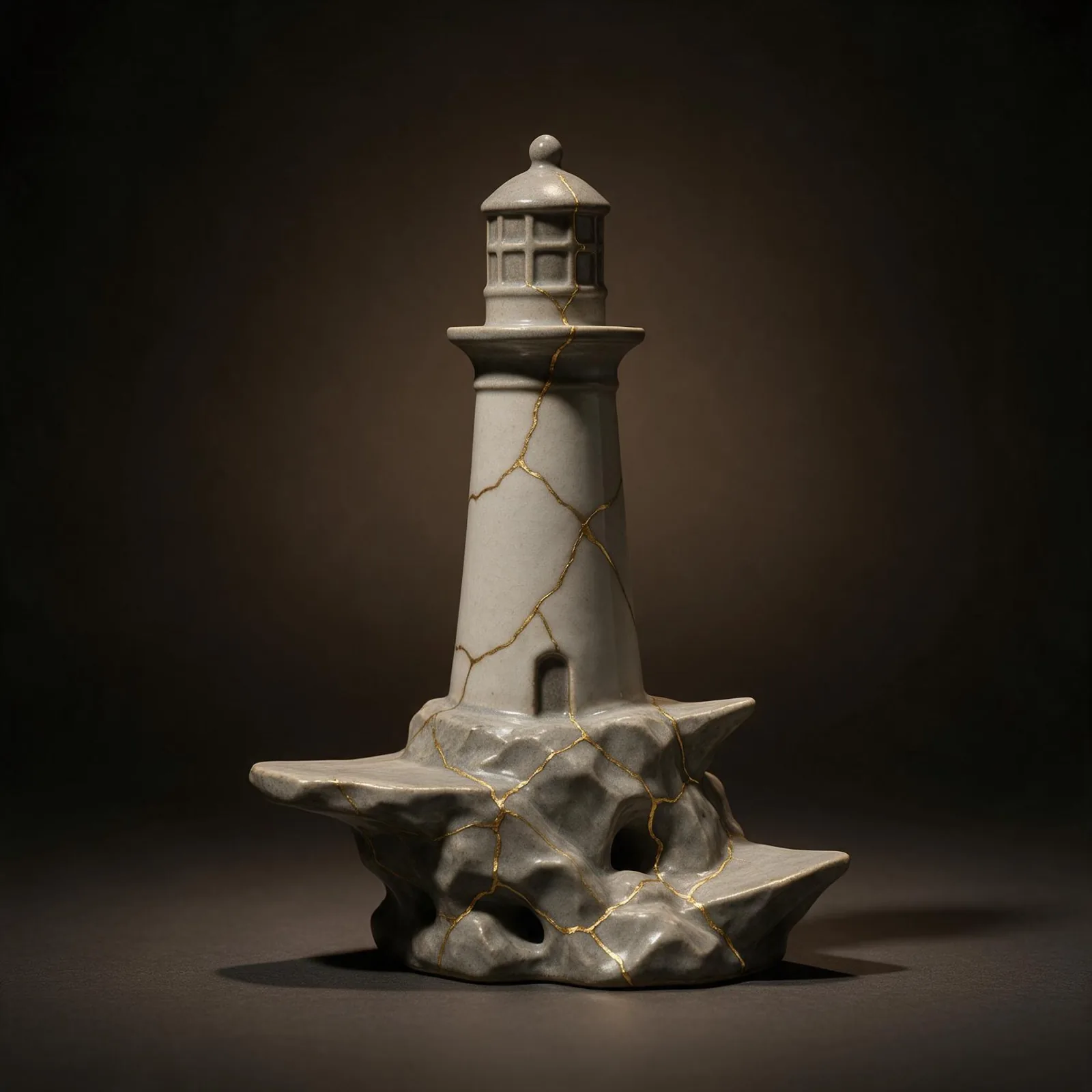
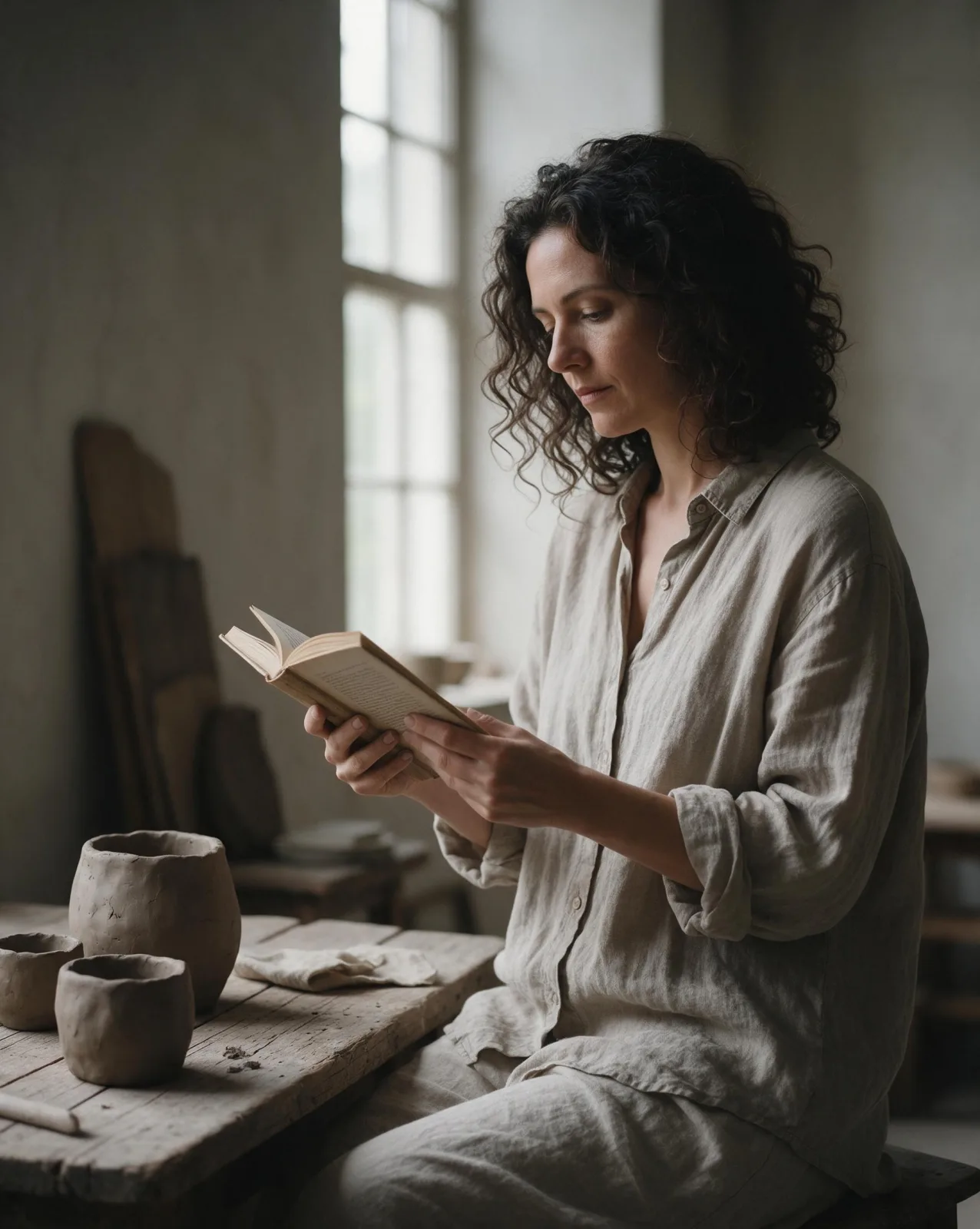
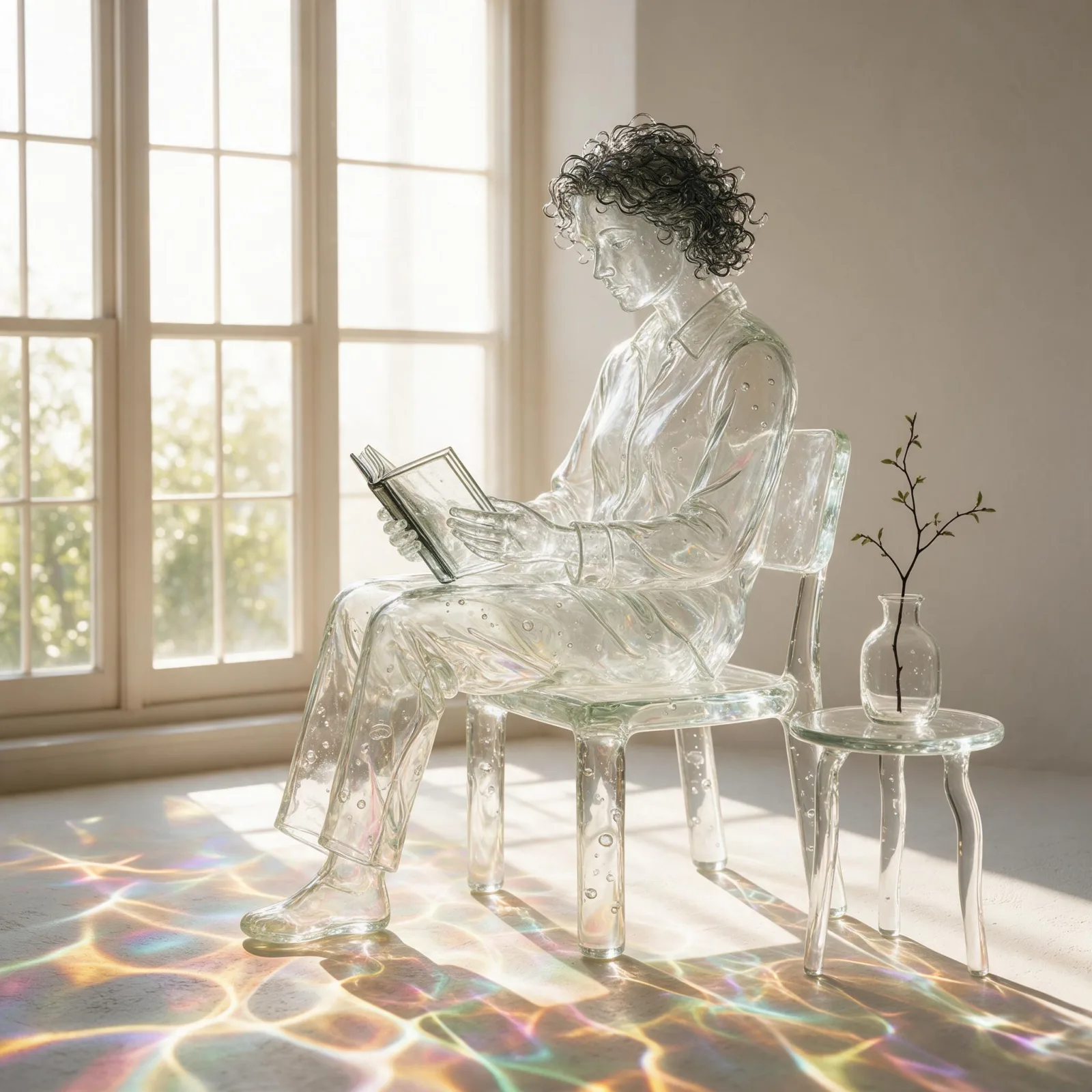
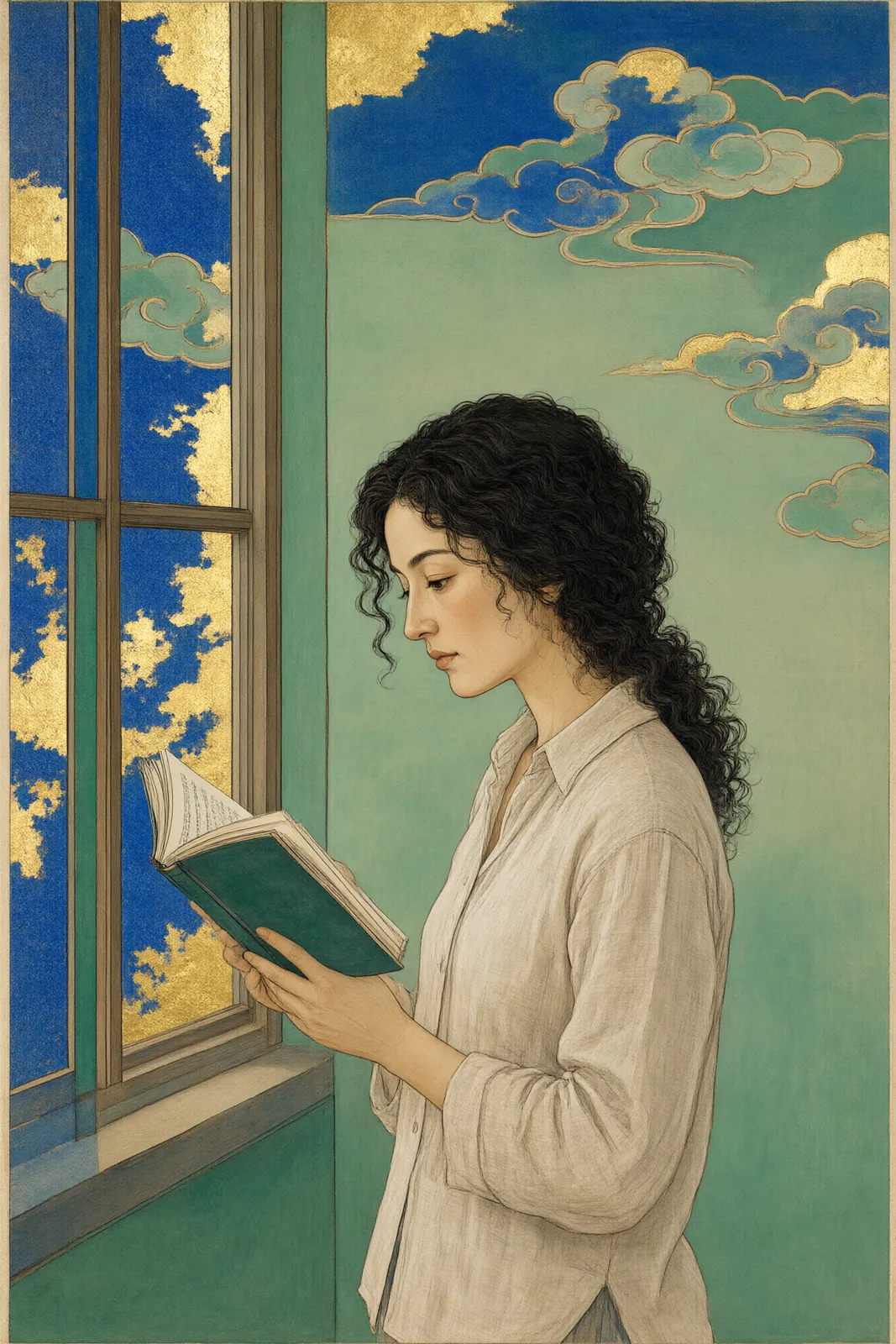
Kintsugi Gold recasts your subject as a glazed stoneware sculpture whose fine cracks have been mended with seams of burnished gold. The glaze is a matte ash grey, the gold lines wander across it like rivers on a map, and a soft museum spotlight lifts the piece out of a dark, neutral backdrop. The result reads as a quiet still life: something broken, repaired and made more beautiful for it.
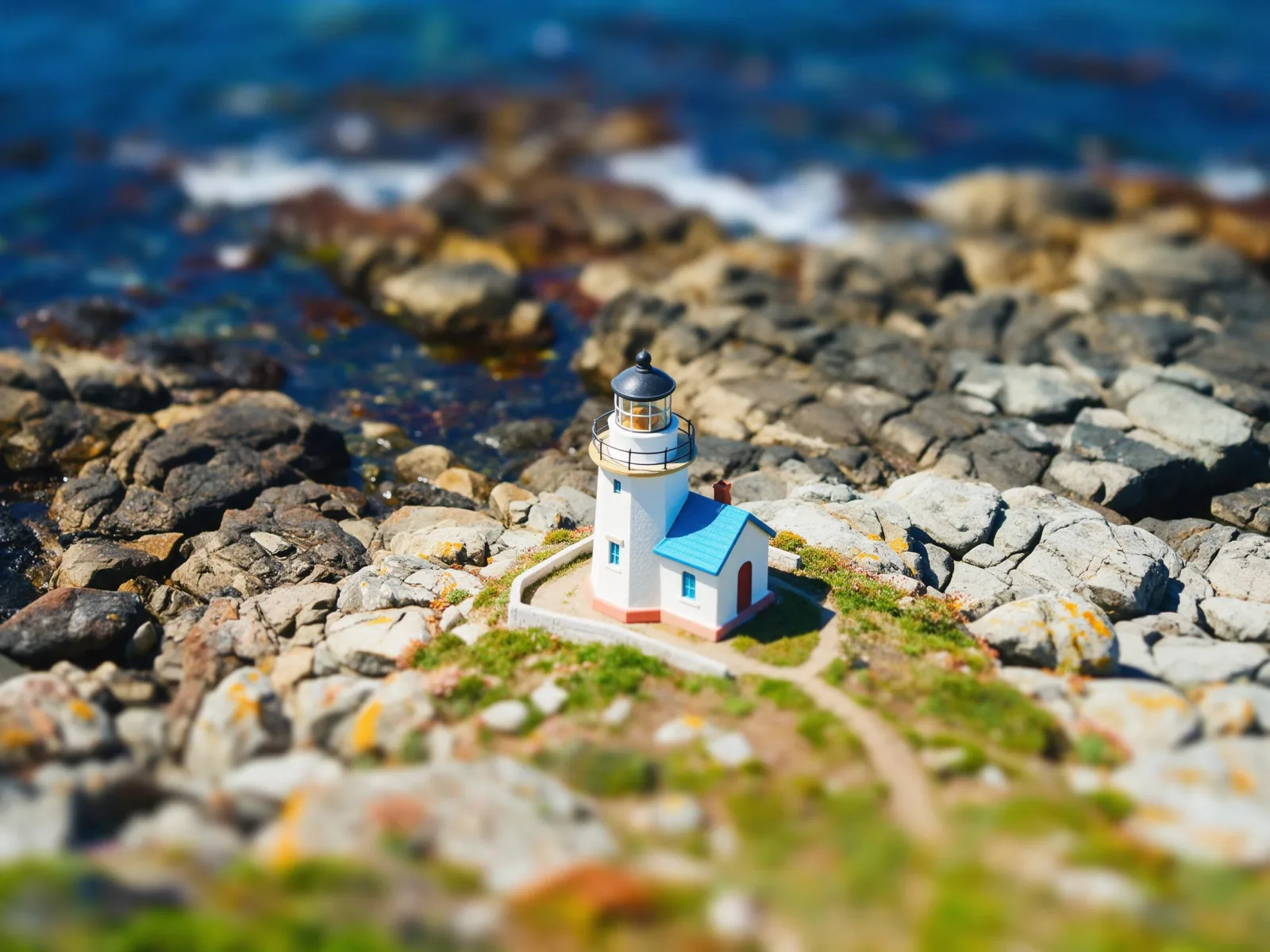
You write the subject; the style fires it in the kiln. A person reading becomes a seated figure with gold veins running through the folds of the sleeve, a man adjusting his collar turns into a standing statue on a plinth, a sleeping cat becomes a small treasure you would find in a glass case, and a lighthouse rises from a gold-seamed rock. The whole subject becomes ceramic, so nothing looks wounded; the cracks live in the glaze.
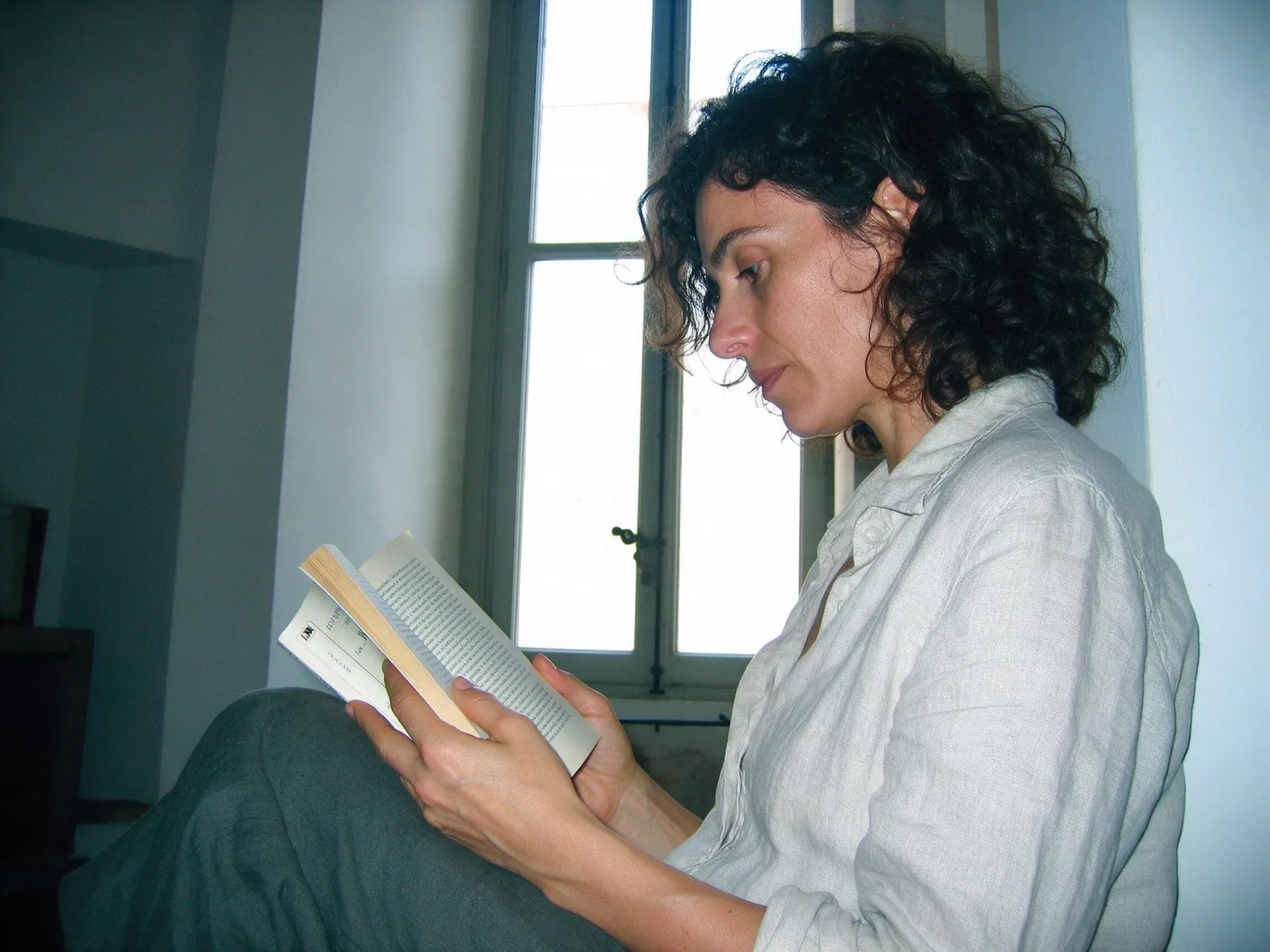
It is made for ceramics and craft brands, gallery and museum posters, book covers about resilience, gifts and remembrance cards. For this composition, we recommend 1:1, with 4:3 as another framing option. It works best on the recommended model, which reliably turns the subject itself into ceramic; some faster models place a person next to a vase instead. This style is text-to-image only: when we tried it on an uploaded photo, the person stayed photographic and only the background or the clothes changed, so describe your subject in words instead.
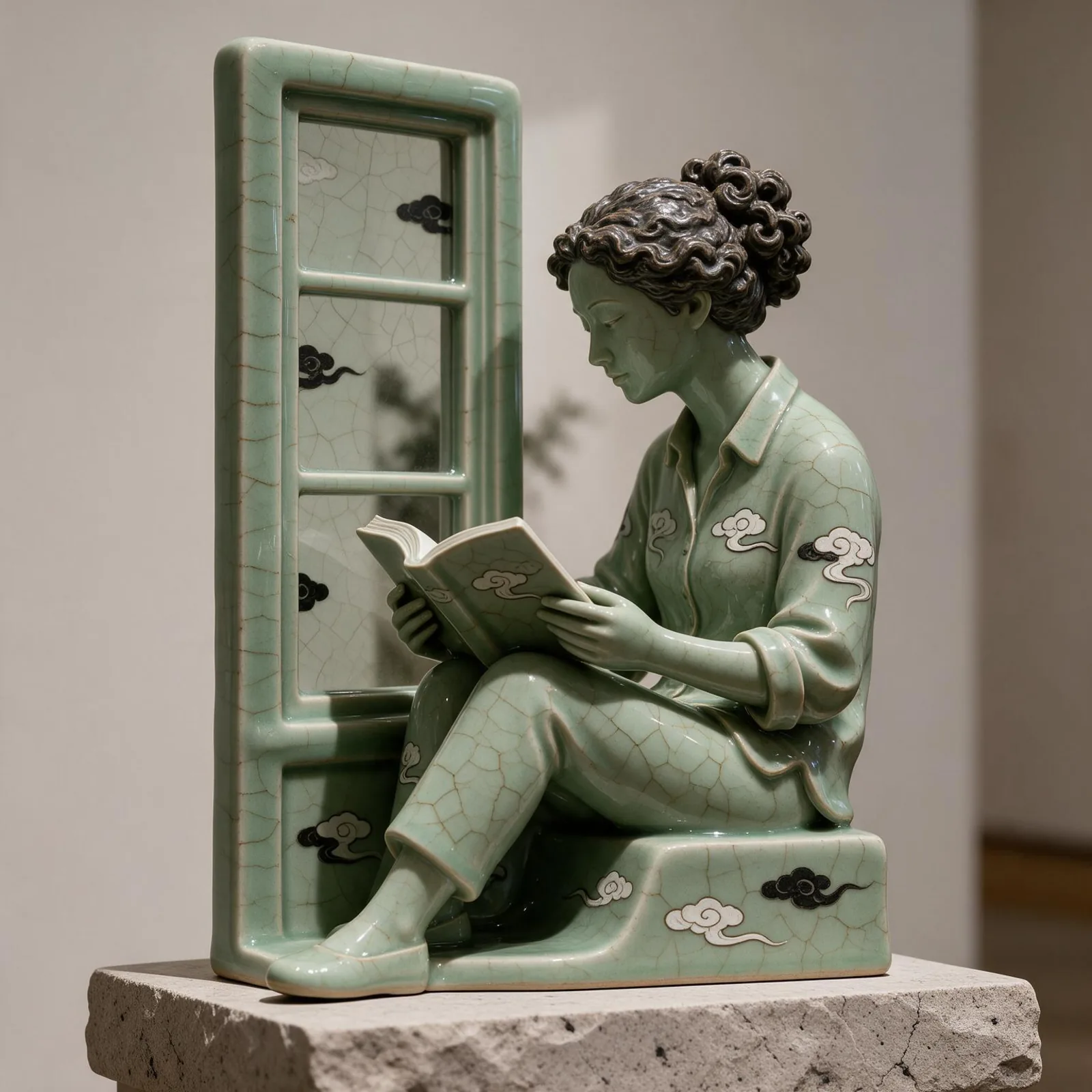
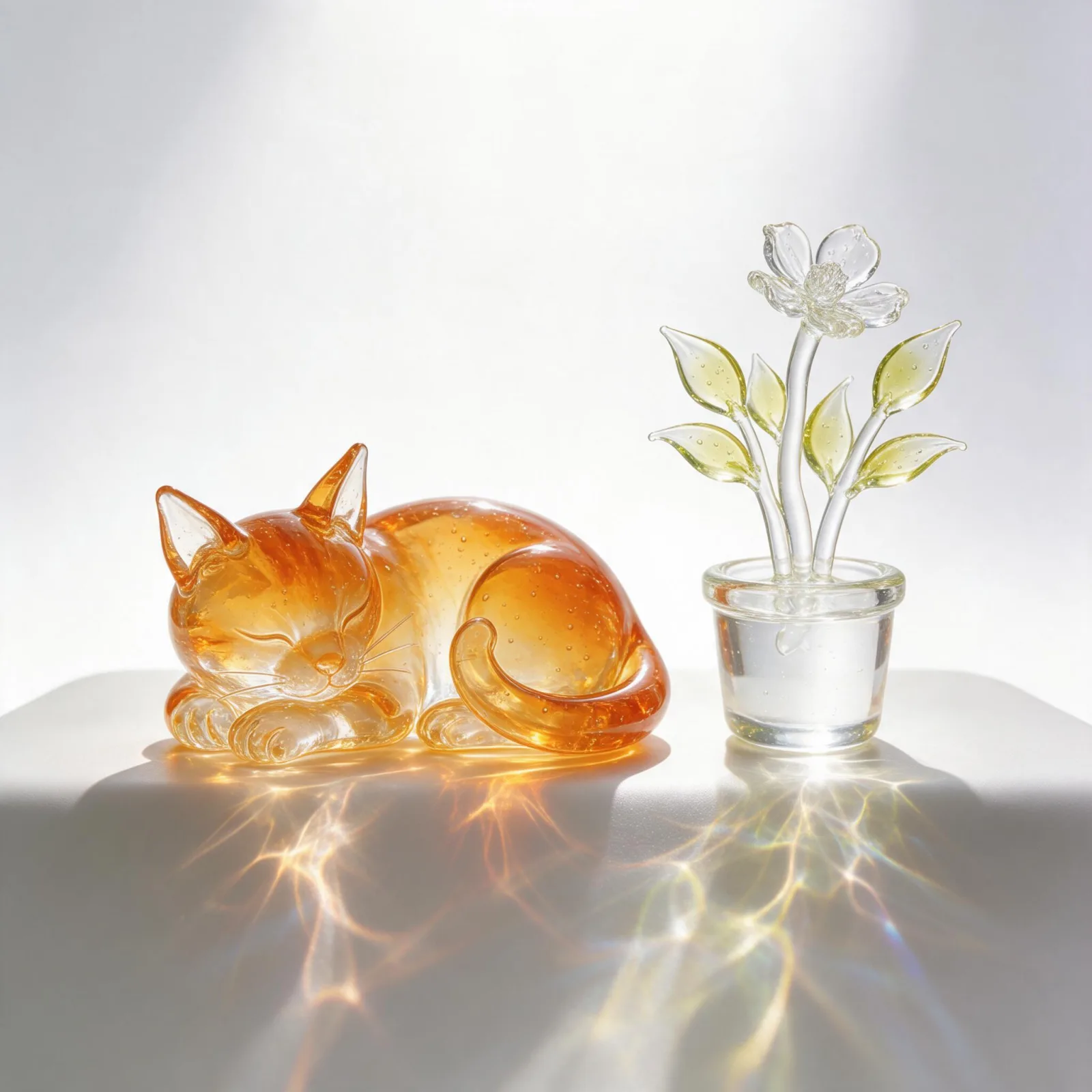
Subjects to paste as they are: “an owl perched on a branch”, “a dancer frozen mid-turn”, “a teapot and two small cups on a tray”. For jade-green glaze with inlaid clouds, try Celadon Glaze; for raw clay photographed in quiet daylight, Wabi-Sabi Calm; for translucent colored glass, Blown Glass.