
Introduction
Outline a website section by section and receive the full page as a single picture. Add up to three references to steer the visual style or feature a particular subject.
| Field | Value |
|---|---|
| Input | Text |
| Output | Image |
| Publisher | Kling |
| Release date | November 17, 2026 |
| Page tasks | Webpage design; e-commerce detail page |
| Prompt size | 1 to 71,000 characters for either task |
| Resolution tiers | 1k (default), 2k |
| Product detail length | short, medium (default), long |
| Webpage reference count | 0 to 3 images |
| Required product photo count | 1 to 3 images |
| Input image requirements | JPG or PNG; up to 30 MB; at least 300 px per side; ratio 2:5 to 5:2 |
| Recorded webpage output | 2048 x 16469 PNG at 2k |
| Recorded product page output | 1024 x 5021 PNG at short length and 1k |
Key features & highlights
A pottery brief became a full scroll
The Tideline Ceramics request named the hero headline, bowls, studio story and footer. The returned 2k PNG measured 2048 x 16469 and contained those page sections. Check small body text before reusing a page this tall.
A short layout anchored to a rose photo
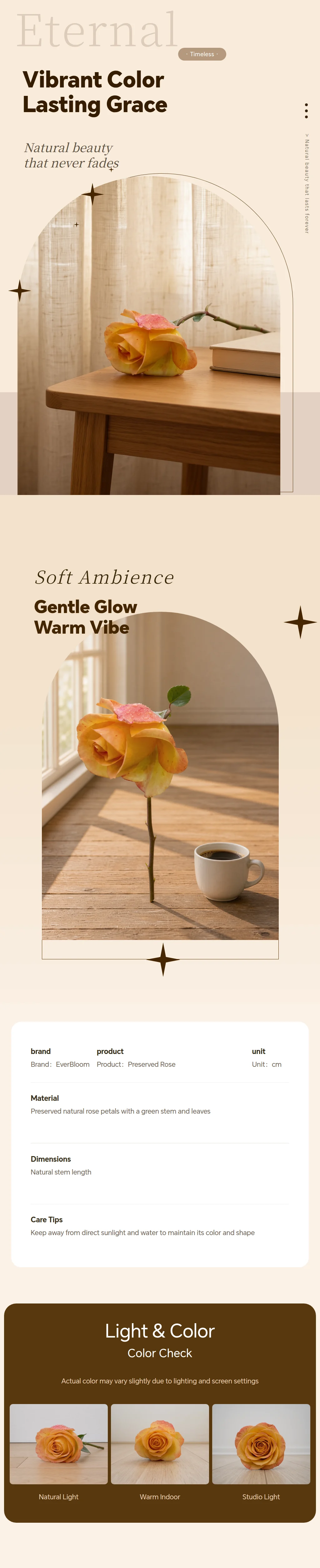
Our preserved-rose request used a supplied product image, short page length and 1k resolution. It returned one 1024 x 5021 PNG arranged as a product detail page around that photo.
Give each section a job and its words
Both endpoints accept a prompt of up to 71,000 characters. Spend the space on the reading order, supplied copy and reference roles. Website references are optional; a product detail page needs one to three product photos.
Separate length from resolution
Both tasks offer 1k and 2k, with 1k as the default. Product detail pages add a short, medium or long length selector. These choices affect the page price, while each input image carries a small input charge.
Request parameters
| Parameter | Required | Description |
|---|---|---|
prompt | Yes | Required, up to 71,000 characters. Describe the site and its audience, list the sections from top to bottom, and quote the copy each one shows. at least 1 characters · at most 71000 characters |
reference_image_urls | No | Optional, up to 3 images that guide the style or show a subject. Use JPG or PNG files of 30 MB or less, at least 300 px per side, with a ratio from 2:5 to 5:2. at most 3 items |
resolution | No | Page tier: 1k or 2k. The default is 1k, and 2k costs more per page. |
Pricing
Each finished page is charged at the rate of the chosen resolution, and every reference image adds a small input charge.
| Specification | Price |
|---|---|
| $0.549 / image |
| $0.596 / image |
Use cases
Pottery studio website concepts
Outline a hero, featured bowls, a studio story and opening hours for a ceramics business. Our Tideline Ceramics run returned those sections in one 2048 x 16469 PNG, with small body text needing review before reuse.
Gift product detail layouts
Start with a product photo and request a hero, selling points, care instructions and a gift message panel. The short preserved-rose run returned one 1024 x 5021 PNG built around the supplied photo.
Brand direction for a design handoff
Use optional website references to communicate a palette or subject, then supply the audience and section order in the prompt. Review the resulting page picture with the team before building the website.
Merchandising briefs by page length
For a storefront product, organize verified information into modules and choose short, medium or long. Keep the text budget appropriate to that choice and inspect the generated page for missing or altered facts.
Prompt guide & pro tips
Match the endpoint to your brief
Choose webpage design for a site visual described in text, with optional references. Choose the product detail endpoint when you can supply product photos and verified selling points.
Write the scroll from top to bottom
Put the modules in reading order and quote the headline, body copy and button labels for each. Explain which image each numbered reference supplies and how it should be used.
Choose the page settings
Select 1k or 2k resolution for either endpoint. For a product detail page, also choose short, medium or long; medium is the default.
Inspect the downloaded page
Read the image at a useful viewing size and compare its wording and product claims with your brief. Check the flow between modules before handing the visual to a designer or preparing a listing graphic.
A website brief expressed as a page image
Use this endpoint to explore the visual direction of a website from a written brief. Describe the audience, the sequence of sections and the copy to place within them. The deliverable is a continuous picture of the page, useful for reviewing the scroll and preparing a design handoff. Website implementation remains a separate step: navigation labels and buttons in the picture are drawn elements.
The prompt can stand on its own. Add references when a particular palette, subject or visual treatment matters, and explain the role of each one. Keep the opening message and the footer requirements in the same brief so reviewers can assess the proposed structure together.
Inputs and resolution
Use these inputs to describe the website and choose its resolution. There is no page length selector here; short, medium and long are choices on the product detail endpoint.
| Parameter | Requirement | How to use it |
|---|---|---|
prompt | Required string, 1 to 71,000 characters | Identify the site, audience, section order and exact display copy. Cite references as @image_1, @image_2. |
reference_image_urls | Optional array, up to 3 images | Supply JPG or PNG files up to 30 MB, at least 300 px per side, with a ratio between 2:5 and 5:2. |
resolution | Optional: 1k or 2k; default 1k | Select the output tier and check the corresponding page price. |
Choose the resolution alongside your section outline. Keep the amount of copy manageable for the layout you want to review, and inspect the downloaded image at the size your team will use.
Give references distinct roles
Tie each numbered reference to a specific instruction. A color reference can guide accents without becoming the subject of the page. A subject reference can show what should be featured. Avoid leaving the relationship between an upload and the surrounding copy unexplained. For each upload, state whether its contribution is the subject, the palette or another visual detail so the page direction stays clear.
Writing a reviewable website brief
Begin with who the site serves and what visitors should understand. Follow with the sections in reading order, then the exact text for the hero, supporting blocks, button labels and footer. Write the visual direction as concrete choices about palette, spacing, image placement and type hierarchy. This gives reviewers a defined brief to compare with the image.
Keep copy attached to its section
A headline without a location can leave its role unclear. Pair each block with an instruction such as hero headline, studio story or opening-hours footer. Supply checked business details yourself and ask the page to use that wording. Leave out claims, prices or schedules that have not been agreed. Prompt capacity is not a reason to fill every module with dense prose.
Plan the handoff before generation
Decide what the visual must help a colleague assess: the order of information, the balance of product imagery and copy, or a brand direction across the scroll. Keep this review goal in the brief. Save the supplied text alongside the generated picture so a designer can rebuild the page using editable content and a developer can implement its interactions.
What the Tideline run showed
On November 18, 2026, our Tideline Ceramics request described a coastal pottery studio, the headline "Made slowly by the sea", featured bowls, a studio story and a footer with opening hours. It used one reference for a warm amber accent and selected 2k resolution. The prompt assigned the reference a color-guidance role for the page accents.
The endpoint returned one 2048 x 16469 PNG arranged as a complete landing page with hero, product, story and footer sections. Small body text on an image this long should be checked before reuse. Compare the hero headline, studio story and opening-hours footer against your source copy, then review the transitions between the product and story sections.
Page pricing and design review
Refer to the price shown on this page for the selected resolution. Each finished website visual is charged at that resolution's rate, and every reference image adds a small input charge. A text brief with no uploaded references has no reference images to add to that input count. Do not infer a product-page length charge from the visual's height.
Read the output at a practical viewing size and compare every text block with the supplied copy. Check the section sequence as well as small text. The returned page picture is not an editable design file or a working site, so plan corrections and implementation as subsequent work.
Choosing a related image family
Kling says its standard image workflow suits individual visual assets, while its series workflow creates coordinated separate images. Compare Kling Image 4.0 for an individual design asset and Kling Image 4.0 Set when the deliverable is a set. Use this webpage task when reviewing a continuous website layout is the purpose of the brief.
API quick start
# Generate the idempotency key once; reuse it when retrying after a lost response.
export SPICY_IDEMPOTENCY_KEY="${SPICY_IDEMPOTENCY_KEY:-$(uuidgen)}"
curl -X POST https://api.spicyapi.ai/api/v1/jobs/createTask \
  -H "Authorization: Bearer $SPICY_API_KEY" \
  -H "Content-Type: application/json" \
  -H "Idempotency-Key: $SPICY_IDEMPOTENCY_KEY" \
  -d '{
  "model": "kling/image-4.0-long/text-to-image",
  "input": {
    "prompt": "A ceramic teapot on a linen cloth, soft window light, muted palette",
    "resolution": "1k"
  }
}'

# Copy data.taskId from the response into TASK_ID, then poll the status.
TASK_ID="TASK_ID_FROM_RESPONSE"
curl "https://api.spicyapi.ai/api/v1/jobs/recordInfo?taskId=$TASK_ID" \
  -H "Authorization: Bearer $SPICY_API_KEY"
See the API reference for authentication, the complete schema, polling, and error handling.